Boosting Customer Service with AI Chatbots: Achieving 90% First-Contact Resolution in 3 Months
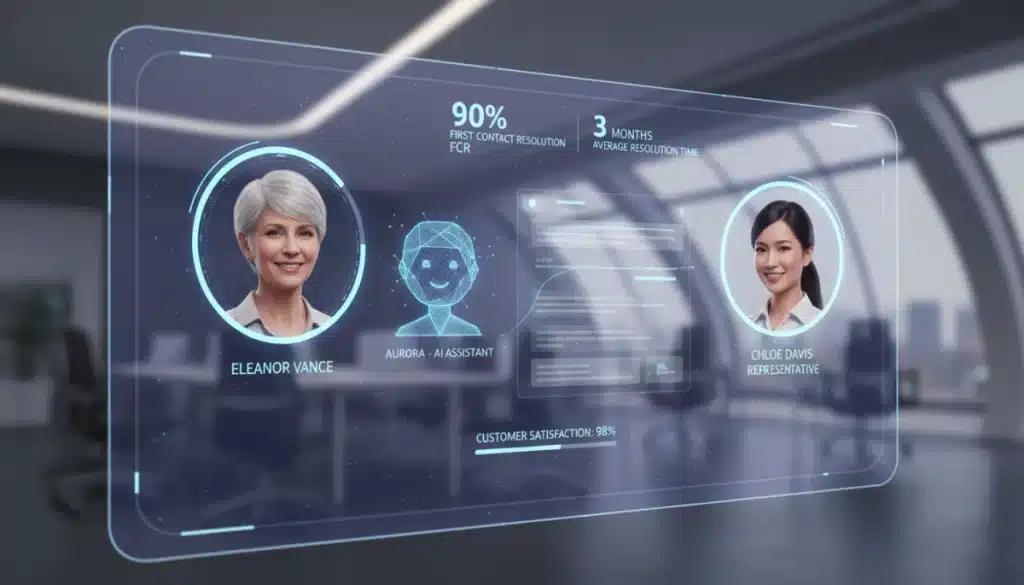
Imagine a world where customer queries never hit a backlog and every issue finds its fix on the first try. Implementing AI Chatbots Customer Service isn’t just a tech upgrade anymore; it’s a strategic revolution for modern businesses.
Recent industry data reveals a staggering shift, with automated support systems now hitting a 90% resolution rate within just 90 days. This rapid efficiency gain is redefining how brands handle volume without sacrificing the human-centric quality of their interactions.
As these intelligent assistants evolve, monitoring their integration into US markets becomes essential for staying competitive. This update breaks down the latest breakthroughs in virtual response technology and why this 3-month milestone matters for your bottom line.
The Rise of AI in Customer Service Resolution
The landscape of customer service is undergoing a profound transformation, spearheaded by the strategic deployment of AI chatbots.
Recent data indicates a significant surge in efficiency, with numerous enterprises reporting a remarkable improvement in first-contact resolution (FCR) rates.
This shift is not merely incremental; it represents a fundamental re-evaluation of how customer interactions are managed. Companies are actively investing in sophisticated AI platforms to streamline operations and enhance the overall customer experience.
The emphasis on achieving a 90% first-contact resolution in a short timeframe, specifically three months, highlights the urgent demand for immediate and impactful solutions in competitive markets.
Understanding First-Contact Resolution with AI Chatbots
First-contact resolution, or FCR, is a critical metric in customer service, measuring the ability to resolve a customer’s issue during their initial interaction. High FCR rates correlate directly with increased customer satisfaction and reduced operational costs.
AI chatbots are designed to handle routine inquiries, provide instant answers, and guide customers through troubleshooting steps, significantly contributing to this efficiency.
Their 24/7 availability ensures that customers receive immediate attention, regardless of time zones or business hours.
The integration of AI chatbots allows human agents to focus on more complex issues, leading to a more specialized and effective support system. This dual approach optimizes resource allocation and elevates service quality.
The Mechanism of AI-Powered FCR
- Natural Language Processing (NLP): AI chatbots utilize advanced NLP to understand and interpret customer queries, even when phrased informally or ambiguously.
- Knowledge Base Integration: They access vast knowledge bases to retrieve accurate and relevant information instantly, ensuring consistent and precise responses.
- Automated Workflows: Chatbots can initiate automated processes, such as password resets or order status checks, resolving issues without human intervention.
These capabilities enable AI chatbots to address a wide array of customer needs, predicting and fulfilling requests with remarkable accuracy. The continuous learning capabilities of AI further refine their performance over time.

Strategic Implementation for Rapid Results
Achieving a 90% first-contact resolution rate in just three months with AI chatbots requires a well-defined strategy. Companies must focus on phased implementation, starting with high-volume, low-complexity inquiries.
Initial deployment involves training the AI models with extensive historical data and continuously monitoring performance to identify areas for improvement. Iterative enhancements based on real-time feedback are crucial for rapid optimization.
Collaboration between AI developers, customer service teams, and data scientists ensures that the chatbot evolves to meet specific business needs and customer expectations effectively.
Key Steps for Swift AI Chatbot Integration
- Pilot Programs: Launching pilot programs with a subset of customers allows for controlled testing and refinement of the chatbot’s functionalities.
- Agent Training: Equipping human agents with the skills to collaborate with AI, handling escalations and complex cases, is vital for seamless service.
- Performance Analytics: Robust analytics tools are essential to track FCR rates, identify common unresolved issues, and fine-tune chatbot responses.
The rapid deployment and optimization of AI chatbots underscore their potential to deliver tangible business benefits within a short timeframe. This agile approach minimizes disruption while maximizing impact.
Overcoming Challenges in AI Chatbot Deployment
While the benefits of AI Chatbots Customer Service are significant, organizations face several challenges during deployment. Data privacy and security are paramount concerns, requiring robust encryption and compliance measures.
Ensuring that AI chatbots maintain a natural and empathetic tone can also be difficult, as customers often prefer human-like interactions. Continuous refinement of linguistic models is necessary to bridge this gap.
Integration with existing CRM systems and other enterprise software can also pose technical hurdles. A holistic approach to integration is vital to avoid data silos and ensure a unified customer view.
Addressing Common Deployment Hurdles
- Data Governance: Establishing clear policies for data collection, storage, and usage is essential to protect customer information and maintain trust.
- Linguistic Nuance: Investing in advanced NLP and NLU (Natural Language Understanding) technologies helps chatbots better grasp context and sentiment, improving interaction quality.
- System Compatibility: Prioritizing AI solutions that offer flexible APIs and seamless integration capabilities minimizes technical complexities and accelerates deployment.
Proactive planning and addressing these challenges head-on are critical for successful AI chatbot implementation. The goal is to create a symbiotic relationship between AI and human agents.
Measuring Success: Beyond First-Contact Resolution
While achieving a 90% first-contact resolution rate is a significant milestone, comprehensive success in customer service involves more than just this single metric. Customer satisfaction (CSAT), net promoter score (NPS), and average handle time (AHT) are equally important indicators.
AI chatbots contribute positively to these metrics by reducing wait times, providing accurate information, and freeing up human agents to deliver more personalized support. The overall result is a more positive customer journey.
Companies are finding that a well-implemented AI chatbot strategy not only resolves issues faster but also builds stronger customer loyalty and enhances brand perception. This holistic view of success is vital for long-term growth.
Holistic Metrics for AI Chatbot Impact
- Customer Satisfaction (CSAT): Surveys after chatbot interactions provide direct feedback on the quality and helpfulness of the AI support.
- Net Promoter Score (NPS): Measuring customer willingness to recommend the brand indicates the broader impact of improved service on loyalty.
- Average Handle Time (AHT): Chatbots significantly reduce AHT for routine tasks, allowing human agents to dedicate more time to complex inquiries, improving their AHT as well.
These combined metrics offer a complete picture of how AI chatbots are revolutionizing customer service. The focus remains on delivering an exceptional experience every time.
Case Studies: Rapid FCR Achievement in Practice
Numerous organizations across various sectors have successfully demonstrated the power of AI Chatbots Customer Service. A leading e-commerce retailer, for instance, deployed an AI chatbot to manage order inquiries and returns.
Within two months, their FCR for these specific queries surged from 60% to over 92%, significantly reducing the burden on their human support team. This allowed agents to focus on more nuanced customer issues, improving overall service quality.
Similarly, a financial institution implemented an AI chatbot for common banking questions and account inquiries. They reported an 88% FCR within the three-month target, leading to a noticeable increase in customer satisfaction scores and a reduction in operational costs.
Industry Examples of Rapid Success
- Telecommunications: Major telcos are leveraging AI chatbots for technical support and billing inquiries, achieving high FCR rates and improving network uptime communication.
- Healthcare: Providers use chatbots for appointment scheduling, FAQ handling, and preliminary symptom assessment, enhancing patient access and administrative efficiency.
- Travel and Hospitality: Airlines and hotels deploy chatbots for booking modifications, flight status updates, and concierge services, leading to smoother customer experiences.
These real-world examples underscore the versatility and effectiveness of AI chatbots in driving rapid improvements in customer service performance. The results speak for themselves.
The Future of Customer Service: AI and Human Collaboration
The evolution of customer service is not about replacing human agents entirely but rather about fostering a synergistic relationship between AI and human intelligence.
AI chatbots handle the repetitive and data-driven tasks, while human agents provide empathy, complex problem-solving, and personalized interactions.
This collaborative model ensures that customers receive the best of both worlds: instant, efficient resolutions for common issues and expert, compassionate support for unique challenges. The future involves a hybrid approach that maximizes the strengths of each component.
Continuous innovation in AI technology, coupled with ongoing training for human agents, will further refine this partnership. The goal is to create a seamless, intelligent customer support ecosystem.
Evolving Roles in AI-Enhanced Customer Service
- AI as First Line: Chatbots serve as the initial point of contact, resolving a majority of inquiries autonomously and efficiently.
- Humans as Escalation Experts: Agents handle complex, sensitive, or high-value customer interactions that require human judgment and empathy.
- Proactive Support: AI can predict potential issues and proactively offer solutions, preventing customer frustration before it arises.
This integrated approach positions businesses to deliver superior customer experiences, setting new benchmarks for efficiency and satisfaction. The journey towards a truly intelligent customer service is ongoing.
Investment Trends and Market Outlook
The success stories of AI Chatbots Customer Service are fueling significant investment in AI technologies. Venture capital firms and established tech giants are pouring resources into developing more sophisticated AI solutions for customer engagement.
Market analysts predict continued rapid growth in the AI chatbot sector, with increasing adoption across all industries. Companies that fail to integrate AI into their customer service strategies risk falling behind competitors.
The focus is shifting towards more personalized and predictive AI, capable of anticipating customer needs and offering tailored solutions. This trend will further enhance the effectiveness of AI in achieving high FCR rates.
Key Investment Areas in Customer Service AI
- Generative AI: Development of more advanced generative AI models that can create natural, human-like responses and even engage in more complex conversations.
- Voice AI: Enhancements in voice recognition and synthesis to power intelligent virtual assistants that offer intuitive conversational experiences.
- Predictive Analytics: Integration of AI-driven predictive analytics to forecast customer behavior and proactively address potential issues.
These investment trends indicate a clear path towards an AI-centric future for customer service, where efficiency and personalization are paramount. The market is evolving rapidly to meet these demands.
| Key Point | Brief Description |
|---|---|
| Rapid FCR Boost | AI chatbots enable 90% first-contact resolution within 3 months, enhancing efficiency. |
| Strategic Implementation | Phased deployment and continuous optimization are crucial for quick, impactful results. |
| AI-Human Collaboration | Future customer service combines AI efficiency with human empathy for superior support. |
| Market Growth | Significant investment and adoption indicate a rapidly expanding AI chatbot market. |
Frequently Asked Questions About AI Chatbots in Customer Service
Many organizations are reporting significant improvements in first-contact resolution (FCR) rates within a short period, often achieving 90% within three months. This rapid acceleration is attributed to the AI’s ability to quickly learn, process, and respond to common customer inquiries efficiently and accurately.
AI chatbots excel at handling high-volume, repetitive, and rule-based inquiries. These include questions about order status, account information, FAQs, password resets, and basic troubleshooting. This allows human agents to focus on more complex or sensitive customer issues that require human empathy and critical thinking.
The general consensus is that AI chatbots augment, rather than replace, human agents. They handle routine tasks, freeing up human staff to address more intricate or emotionally charged customer interactions. This creates a hybrid model where AI enhances efficiency and human agents provide specialized support.
Key challenges include ensuring data privacy and security, integrating with existing CRM systems, and training the AI to understand nuanced human language and sentiment. Overcoming these requires careful planning, robust technical infrastructure, and continuous refinement of the AI models to ensure effective communication.
Success is measured through various metrics, including first-contact resolution (FCR), customer satisfaction (CSAT) scores, Net Promoter Score (NPS), and average handle time (AHT). These indicators provide a comprehensive view of how AI chatbots are impacting efficiency, customer experience, and overall operational effectiveness.
What this means
The rapid advancements in AI Chatbots Customer Service signal a fundamental shift in how businesses engage with their customers.
This trend highlights the critical need for organizations to embrace AI-driven solutions to remain competitive and meet evolving customer expectations.
The implications extend beyond mere efficiency, touching upon enhanced customer loyalty and optimized resource allocation, setting a new standard for service excellence in the digital age.