Unlocking 15% Efficiency: How Edge AI is Revolutionizing Manufacturing in the U.S.
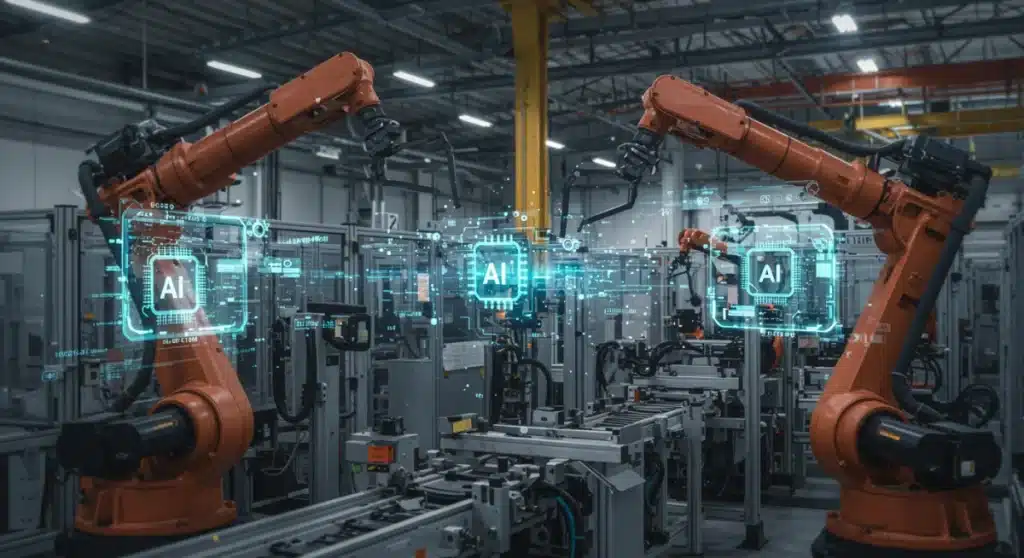
The landscape of Edge AI in US Manufacturing is shifting rapidly in 2026, as domestic factories trade slow cloud dependencies for localized intelligence. This digital overhaul is no longer a distant goal but a present-day mandate for industrial leaders seeking a competitive advantage.
By processing data directly on the shop floor, these decentralized systems eliminate latency and enable split-second adjustments to production lines.
This transition toward on-site neural processing is precisely what allows facilities to bypass traditional bottlenecks and minimize unplanned downtime.
Recent industry breakthroughs show that integrating smart sensors with autonomous edge workloads can boost operational output by up to 15%. As we head deeper into the year, keeping a pulse on these localized automation trends will be essential for staying ahead in the global market.
The Ascent of Edge AI in U.S. Manufacturing
The U.S. manufacturing landscape is currently undergoing a transformative phase, driven by the imperative to enhance productivity and maintain a competitive edge globally.
Edge AI, with its decentralized data processing capabilities, is rapidly becoming a cornerstone of this evolution.
This technological advancement allows for sophisticated AI algorithms to be executed directly on devices at the network’s edge, minimizing reliance on centralized cloud infrastructure.
This local processing capability is crucial for applications demanding instant responses and high data security.
Industry projections indicate that the widespread adoption of Edge AI solutions will be instrumental in achieving significant operational improvements. Experts forecast a substantial boost in efficiency, paving the way for a more agile and responsive manufacturing environment.
Defining Edge AI and Its Core Advantages
Edge AI refers to artificial intelligence systems that perform computations and analysis at or near the source of data generation, rather than relying solely on cloud-based servers. This distributed approach brings processing power closer to the data, offering numerous benefits.
Key advantages include reduced latency, enhanced data security, and lower bandwidth consumption, which are critical in fast-paced manufacturing environments.
By processing data locally, Edge AI enables real-time decision-making, paramount for optimizing production lines and preventing failures.
This technology facilitates immediate insights from machinery and sensors, allowing for rapid adjustments and predictive maintenance. The ability to act instantaneously on data is a game-changer for industries striving for maximum uptime and minimal waste.
Real-time Data Processing and Decision Making
Edge AI’s capacity for real-time data processing is unparalleled, allowing manufacturing systems to respond to events as they happen. This immediacy is vital for maintaining continuous operations and quickly addressing anomalies.
The direct impact on decision-making cycles means that production issues can be identified and resolved in moments, not minutes or hours. This significantly reduces downtime and improves the overall flow of manufacturing processes, directly contributing to the goal of Edge AI in US Manufacturing.
- Reduced operational latency
- Instantaneous anomaly detection
- Optimized production flow
Enhanced Security and Data Privacy
By keeping sensitive operational data localized, Edge AI significantly bolsters data security and privacy within manufacturing facilities. This reduces the risk of data breaches associated with transmitting information to external cloud servers.
Manufacturers can maintain stricter control over their proprietary data and intellectual property.
This localized processing environment is particularly important for industries handling confidential designs, processes, and performance metrics, ensuring compliance with stringent regulatory requirements.
- Minimized exposure to cyber threats
- Greater control over sensitive data
- Compliance with industry regulations

Targeting 15% Efficiency: The Roadmap to 2026
The ambitious goal of Edge AI in US Manufacturing is not merely a hypothetical target but a strategic imperative. This objective is underpinned by a clear roadmap involving phased implementation and continuous technological refinement.
Achieving this efficiency gain will necessitate significant investment in Edge AI infrastructure, specialized talent, and robust integration strategies.
The journey involves upgrading existing machinery with intelligent sensors and deploying sophisticated Edge AI algorithms across production lines.
Industry leaders and policymakers are collaborating to establish standards and incentives that will accelerate this transition. The focus is on creating an ecosystem where Edge AI can thrive, delivering tangible benefits across diverse manufacturing sectors.
Key Implementation Strategies
Successful implementation of Edge AI in manufacturing relies on several strategic pillars. These include phased rollouts, pilot programs, and a strong emphasis on workforce training to adapt to new operational paradigms.
Manufacturers are advised to start with specific, high-impact areas where Edge AI can demonstrate immediate returns, such as quality control or predictive maintenance. This allows for iterative learning and refinement before broader deployment.
- Phased deployment in critical areas
- Investment in employee upskilling
- Strategic partnerships with tech providers
Measuring and Validating Efficiency Gains
Robust metrics and validation processes are essential to confirm the 15% efficiency target. Manufacturers must establish clear benchmarks and continuously monitor key performance indicators (KPIs) to track progress.
This involves analyzing data on throughput, waste reduction, energy consumption, and machine uptime.
Independent audits and third-party verification will play a crucial role in substantiating the achieved efficiency improvements and demonstrating the success of Edge AI in US Manufacturing initiatives.
- Clear KPI definition and tracking
- Regular performance audits
- Benchmarking against industry standards
Impact Across Key Manufacturing Sectors
The transformative potential of Edge AI extends across various U.S. manufacturing sectors, each poised to benefit uniquely from its capabilities. From automotive to aerospace, and from consumer goods to heavy machinery, the applications are diverse and impactful.
In sectors like automotive, Edge AI enhances assembly line precision and enables advanced robotics for complex tasks. This leads to higher quality products and faster production cycles, directly contributing to the goal of Edge AI in US Manufacturing.
For industries dealing with perishable goods, Edge AI optimizes supply chain logistics and quality control, reducing spoilage and ensuring product freshness. The ability to monitor conditions in real-time from production to delivery is invaluable.
Automotive and Aerospace Industries
In automotive manufacturing, Edge AI drives advancements in automated assembly, quality inspection, and predictive maintenance for complex machinery. This leads to fewer defects and increased throughput, vital for competitive global markets.
The aerospace sector leverages Edge AI for meticulous component inspection, ensuring the highest safety standards and operational reliability. Real-time monitoring of manufacturing processes minimizes errors and optimizes material usage.
Heavy Machinery and Consumer Goods
Heavy machinery manufacturers benefit from Edge AI’s ability to monitor equipment health and predict potential failures, reducing costly breakdowns and extending asset lifespans. This proactive approach ensures operational continuity and minimizes unexpected expenses.
In consumer goods production, Edge AI optimizes packaging lines, monitors product consistency, and personalizes manufacturing processes based on demand fluctuations. This agility allows for rapid adaptation to market trends and improved customer satisfaction.
Challenges and Mitigation Strategies
While the promise of Edge AI in manufacturing is substantial, its widespread adoption is not without challenges. These include the initial investment costs, the complexity of integrating new technologies with legacy systems, and the need for a skilled workforce.
Addressing these hurdles requires a multi-faceted approach, combining strategic financial planning, modular integration techniques, and comprehensive training programs. Proactive planning is crucial to navigate these complexities successfully.
Manufacturers must also consider cybersecurity risks inherent in interconnected systems and develop robust data governance policies. These measures are essential to protect intellectual property and maintain operational integrity while pursuing the goal of Edge AI in US Manufacturing.
Integration with Legacy Systems
Integrating modern Edge AI solutions with existing legacy manufacturing infrastructure presents a significant technical challenge. Many older systems were not designed for seamless digital connectivity or advanced data processing.
Mitigation strategies often involve implementing middleware, API-driven connectors, and phased upgrades to ensure compatibility and minimize disruption. This careful integration ensures that the benefits of Edge AI in US Manufacturing can be realized without a complete overhaul of existing, functional equipment.
Workforce Development and Skill Gaps
The rapid evolution of Edge AI technology necessitates a highly skilled workforce capable of deploying, managing, and maintaining these advanced systems. A significant skill gap currently exists in many manufacturing organizations.
To address this, companies are investing in comprehensive training programs, partnering with educational institutions, and recruiting talent with expertise in AI, data science, and industrial automation.
Government Initiatives and Industry Collaboration
Recognizing the strategic importance of Edge AI in bolstering U.S. manufacturing competitiveness, government agencies are actively supporting its adoption through various initiatives. These programs aim to reduce barriers to entry and accelerate technological integration.
Such initiatives include funding for research and development, tax incentives for companies investing in advanced manufacturing technologies, and the establishment of industry-academic partnerships.
These efforts are designed to foster an environment conducive to innovation and growth.
Collaborative efforts between government, industry, and academia are crucial for developing standardized frameworks, sharing best practices, and ensuring a robust talent pipeline. These partnerships are vital for driving advancements in Edge AI in US Manufacturing capabilities and achieving collective goals.
Funding and R&D Support
Federal and state governments are providing substantial funding for research and development projects focused on Edge AI applications in manufacturing.
These grants and programs support innovation in areas such as intelligent automation, predictive analytics, and secure data processing.
This financial backing helps small and medium-sized manufacturers (SMEs) overcome initial investment hurdles, enabling them to explore and implement Edge AI solutions.
Such support is instrumental in democratizing access to advanced technologies and promoting widespread adoption for Edge AI in US Manufacturing.
Policy Frameworks and Standardization
The development of clear policy frameworks and industry standards is essential for the seamless integration and interoperability of Edge AI systems. Government bodies are working with industry consortia to define best practices and regulatory guidelines.
These frameworks address critical aspects such as data privacy, cybersecurity protocols, and ethical AI deployment.
Standardization ensures that Edge AI solutions are scalable, secure, and reliable across diverse manufacturing environments, fostering trust and accelerating adoption in Edge AI in US Manufacturing.
The Long-Term Vision: Beyond 2026
While the immediate focus is on Edge AI in US Manufacturing, the long-term vision extends far beyond this initial milestone. Edge AI is set to become an indispensable component of the next generation of smart factories.
Future developments will likely see even more sophisticated Edge AI capabilities, including autonomous decision-making systems, hyper-personalized production, and highly resilient supply chains.
The technology will continue to evolve, integrating with other emerging innovations like quantum computing and advanced robotics.
This sustained evolution will not only drive further efficiency gains but also fundamentally reshape the competitive landscape of global manufacturing.
The U.S. aims to be at the forefront of this transformation, leading in innovation and industrial output through advanced Edge AI in US Manufacturing initiatives.
| Key Aspect | Brief Description |
|---|---|
| Efficiency Target | Achieving 15% efficiency gain in U.S. manufacturing by 2026. |
| Technology Focus | Edge AI for local, real-time data processing and decision-making. |
| Key Benefits | Reduced latency, enhanced security, optimized production, predictive maintenance. |
| Challenges Addressed | Integration with legacy systems, workforce skill gaps, cybersecurity. |
Frequently Asked Questions About Edge AI in Manufacturing
Edge AI refers to artificial intelligence processing done directly on factory floor devices and sensors. This localized approach eliminates the need to send all data to a central cloud, enabling real-time analysis and immediate decision-making for machines and production lines. It’s crucial for swift operational responses.
Edge AI boosts efficiency by enabling real-time anomaly detection, predictive maintenance, and optimized resource allocation directly on the factory floor. This reduces downtime, minimizes waste, and improves product quality, collectively contributing to the targeted 15% efficiency gain by 2026 across U.S. industries.
Key challenges include integrating Edge AI with existing legacy systems, addressing the current skill gaps in the workforce, and managing the initial investment costs. Additionally, ensuring robust cybersecurity for distributed AI systems is a critical concern that manufacturers must address proactively.
Sectors like automotive, aerospace, heavy machinery, and consumer goods are expected to see significant benefits. Edge AI enhances precision in assembly, optimizes quality control, enables predictive maintenance for complex equipment, and improves supply chain logistics across these diverse industries.
The U.S. government supports Edge AI adoption through R&D funding, tax incentives for advanced manufacturing investments, and fostering industry-academic collaborations. These initiatives aim to accelerate technological integration, establish industry standards, and build a skilled workforce necessary for a competitive future.
Looking Ahead: The Future of U.S. Manufacturing with Edge AI
The drive towards Edge AI in US Manufacturing signifies a critical juncture for American industry. This technological shift is not merely about incremental improvements but about fundamentally reshaping operational capabilities and global competitiveness.
As Edge AI continues to mature, its integration will lead to more resilient, responsive, and intelligent manufacturing ecosystems. The ongoing developments in this field will be crucial to observe, as they will dictate the pace and scope of industrial transformation.
Businesses and policymakers must remain agile, adapting to new technological advancements and fostering an environment that supports continuous innovation. The strategic implementation of Edge AI will ultimately determine the future trajectory of U.S. manufacturing in the global arena.