Neural Interfaces: Top 4 US Startups in Brain-Computer Interaction 2026
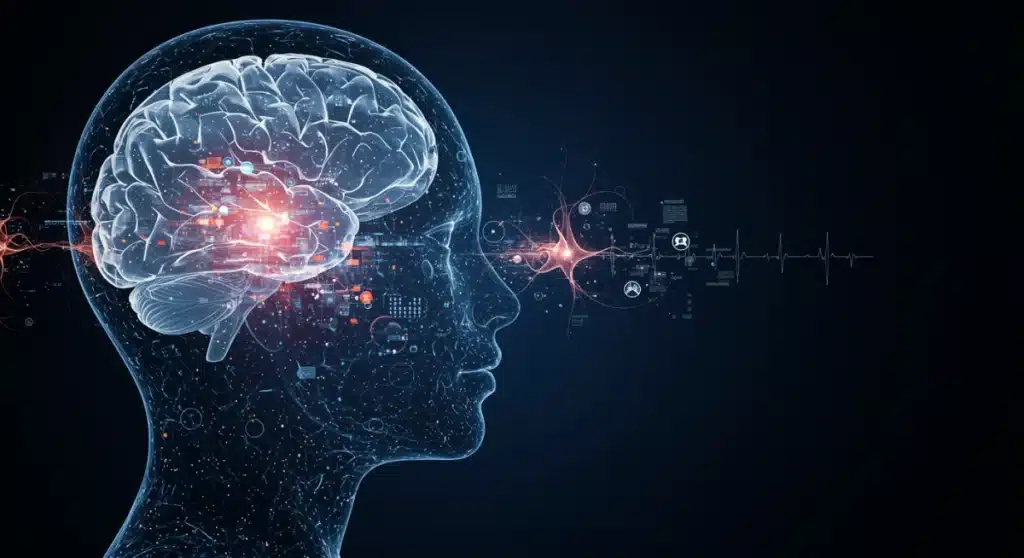
The field of Neural Interfaces Startups is no longer a distant sci-fi dream; by 2026, it has become the pulse of American innovation. As the barrier between mind and machine dissolves, these ventures are rewriting the rules of human potential through sophisticated neural engineering.
This revolution isn’t just about silicon and synapses, it’s about restoring autonomy and expanding cognition.
From high-bandwidth implants to non-invasive wearables, the current BCI ecosystem is delivering practical solutions for complex neurological challenges once deemed insurmountable.
We have identified the four U.S. pioneers leading this neurotech charge with groundbreaking patent filings and clinical milestones.
The Dawn of Direct Brain-Computer Interaction
The concept of directly interfacing with the human brain, once confined to science fiction, is rapidly becoming a reality.
Advances in neuroscience, microelectronics, and artificial intelligence are converging to enable sophisticated Brain-Computer Interfaces that can interpret neural signals and translate them into actions or digital commands.
This paradigm shift has profound implications for individuals with neurological disorders, offering new avenues for communication, mobility, and independence.
The competitive environment among U.S. startups is accelerating this progress, fostering rapid development and deployment of novel solutions.
As we approach 2026, the focus is shifting from proof-of-concept to practical, scalable applications. The startups highlighted here are leading this charge, each with a unique approach to unlocking the brain’s potential.
Technological Leaps in Neural Decoding
Recent breakthroughs in neural decoding algorithms allow for more accurate and efficient interpretation of complex brain signals. These advancements are critical for creating intuitive and responsive BCI systems that can truly augment human capabilities.
The integration of machine learning and artificial intelligence plays a pivotal role in refining these decoding processes, enabling BCIs to adapt and learn from individual users over time. This continuous learning is essential for personalized and effective neural interfaces.
These technological leaps are foundational to the success of the Neural Interfaces Startups 2026, providing them with the tools needed to develop highly functional and reliable devices.
Miniaturization and Non-Invasive Approaches
The trend towards miniaturization of neural implants and the development of increasingly effective non-invasive BCI technologies are also key drivers. Smaller, less intrusive devices reduce surgical risks and expand the potential user base.
Non-invasive methods, such as advanced EEG and fNIRS, are garnering significant attention for their accessibility and ease of use, even if they currently offer less precision than invasive implants. Research continues to bridge this gap, enhancing signal quality and decoding accuracy.
These developments signify a broader push to make neural interfaces more accessible and safer for a wider population, a critical factor for market adoption and widespread impact.
Neuralink: Pioneering Invasive BCI Solutions
Neuralink, founded by Elon Musk, remains one of the most recognized and ambitious players in the Neural Interfaces arena. Their primary focus is on developing ultra-high bandwidth brain-machine interfaces that can both read and write information to the brain.
The company’s approach involves implanting a device, the Link, directly into the brain, utilizing flexible threads embedded with numerous electrodes.
This invasive method aims to achieve unparalleled precision and data transfer rates, targeting applications from restoring motor function to treating neurological disorders.
Neuralink’s progress, including recent human trials, positions it as a critical entity among Neural Interfaces Startups 2026, potentially revolutionizing how we interact with technology and address severe medical conditions.
Recent Milestones and Human Trials
In early 2024, Neuralink announced its first human implant, a significant step forward in its ambitious timeline. This trial focuses on individuals with paralysis, aiming to enable them to control external devices with their thoughts.
The initial results, though preliminary, have shown promising signs, with participants demonstrating the ability to control a computer cursor. These milestones are closely watched by the scientific community and potential investors, validating the company’s core technology.
These successful initial human deployments mark a pivotal moment for Neuralink, setting a precedent for future invasive BCI applications and accelerating the path to broader clinical use.
Future Applications and Challenges
Beyond immediate medical applications, Neuralink envisions a future where its technology could enhance human cognitive abilities and facilitate direct communication with AI. This long-term vision positions them at the forefront of human augmentation.
However, the path forward is not without challenges, including regulatory hurdles, ethical considerations surrounding brain implantation, and the complex task of ensuring long-term device safety and reliability.
These factors are critical for sustained growth and public acceptance.
Despite these challenges, Neuralink’s bold objectives and significant capital backing ensure its continued prominence in the discussion of Neural Interfaces Startups 2026.
Synchron: Bridging the Gap with Minimally Invasive Implants
Synchron stands out among Neural Interfaces Startups 2026 with its focus on a minimally invasive brain-computer interface. Their flagship product, the Stentrode, is designed to be implanted into a blood vessel in the brain, avoiding open-brain surgery.
This less invasive approach significantly reduces surgical risks and recovery times, making BCI technology more accessible to a wider patient population.
Synchron’s technology aims to enable patients with severe paralysis to control digital devices using their thoughts.
Their clinical trials have demonstrated promising results, showcasing the potential for a safer and more scalable BCI solution, which could accelerate adoption in clinical settings.
The Stentrode Technology Explained
The Stentrode is a small, flexible device that is delivered to a blood vessel in the brain via a catheter, similar to a stent procedure for cardiac conditions. Once in place, it expands and records neural signals from the motor cortex.
These signals are then transmitted wirelessly to an external device, allowing users to control computers, tablets, and other assistive technologies. The innovative delivery method is a key differentiator for Synchron.
This ingenious design addresses a major barrier to widespread BCI adoption: the perceived risk and invasiveness of traditional brain surgery.
Clinical Progress and Commercialization Path
Synchron has been making steady progress in clinical trials, with several patients already using the Stentrode to regain significant independence. Reports indicate successful control of digital devices for communication and daily tasks.
The company has also received significant funding and regulatory approvals, indicating a clear path toward commercialization in the coming years. Their focus on medical applications aligns with immediate market needs.
Synchron’s commitment to a less invasive solution positions it as a strong contender in the race to bring neural interfaces to a broader patient base, making it a key player among Neural Interfaces Startups 2026.
Blackrock Neurotech: The Foundation of Modern BCI
Blackrock Neurotech, while not a new startup in the strictest sense, has been a foundational pillar in the BCI industry for decades, providing the core technology for many research labs and clinical trials. Their Utah Array is a widely used intracranial neural interface.
The company is now transitioning from being primarily a research tool provider to developing and commercializing its own BCI solutions for patients. This strategic shift positions them as a direct competitor in the burgeoning market of Neural Interfaces Startups 2026.
Their deep expertise and established technology base give them a unique advantage, allowing them to leverage years of data and research into practical applications.
The Utah Array and its Legacy
The Utah Array is a microelectrode array designed for direct implantation into the brain, capable of recording signals from hundreds of neurons simultaneously. Its robust design and reliability have made it a standard in BCI research.
This extensive track record means Blackrock Neurotech has unparalleled experience in neural signal acquisition and processing. Their technology has been validated in numerous scientific studies and early human trials.
The legacy of the Utah Array provides a strong foundation for Blackrock Neurotech’s current pivot towards patient-facing BCI products, building on decades of proven performance.
Expanding into Patient-Centric Devices
Blackrock Neurotech’s new focus involves developing complete BCI systems for individuals with paralysis, aiming to restore communication and mobility. They are integrating their robust hardware with advanced software for decoding and control.
Their upcoming devices are designed to be user-friendly and highly functional, leveraging their deep understanding of neural data. This expansion represents a significant move into direct patient care, rather than just research support.
This strategic shift underscores Blackrock Neurotech’s ambition to be a leading provider of clinical BCI solutions, solidifying its place among the top Neural Interfaces Startups 2026.
Paradromics: High-Bandwidth for Complex Applications
Paradromics is another significant player among Neural Interfaces Startups 2026, specializing in developing high-bandwidth brain-computer interfaces.
Their technology aims to achieve data transfer rates significantly higher than current BCI systems, opening doors for more complex applications.
The company’s core innovation lies in its proprietary microelectrode array, which can capture a vast amount of neural data.
This high bandwidth is crucial for decoding intricate thoughts and intentions, potentially enabling more natural and nuanced control of external devices.
Paradromics is particularly focused on applications that require rich neural information, such as advanced prosthetics and restoring speech functionality for individuals with severe communication impairments.
The Data-Driven Approach to BCI
Paradromics emphasizes a data-driven approach, believing that higher fidelity and quantity of neural data will lead to more precise and versatile BCI systems. Their technology is built to maximize the information extracted from the brain.
This focus on data acquisition is complemented by sophisticated decoding algorithms that can process and interpret large datasets in real-time. The goal is to create a seamless interface that truly understands user intent.
The commitment to high-bandwidth data acquisition positions Paradromics for breakthroughs in applications requiring fine-grained control and complex communication, distinguishing it within the Neural Interfaces landscape.
Targeting Advanced Medical Restorations
The primary applications for Paradromics’ high-bandwidth BCI include restoring communication for locked-in patients and providing advanced control for robotic limbs.
These are areas where current BCI solutions often face limitations due to bandwidth constraints.
By enabling more natural and fluid control, Paradromics aims to significantly improve the quality of life for individuals with severe disabilities. Their technology has the potential to move beyond basic command input to more expressive and intuitive interactions.
As these technologies mature, Paradromics is poised to make substantial contributions to medical restoration, securing its position as one of the most promising Neural Interfaces Startups 2026.
Investment and Regulatory Landscape for Neural Interfaces
The investment landscape for Neural Interfaces Startups 2026 is robust, with venture capitalists and tech giants pouring significant capital into the sector. The promise of transformative medical solutions and human augmentation is attracting substantial funding.
However, the regulatory environment is also evolving, with agencies like the FDA establishing new guidelines for the testing and approval of BCI devices. Companies must navigate complex ethical and safety considerations to bring their products to market.
This balance between innovation and regulation is crucial for the responsible development and widespread adoption of neural interface technologies, ensuring both progress and patient safety.
Key Investors and Funding Trends
Major investment firms and prominent individuals continue to back these neurotech ventures, recognizing the long-term potential of BCI. Funding rounds routinely exceed tens or even hundreds of millions of dollars, fueling rapid research and development.
These investments are not only financial but also bring strategic partnerships and expertise, accelerating the startups’ ability to scale their operations and conduct extensive clinical trials. The trend indicates sustained confidence in the sector.
The significant influx of capital underscores the belief that neural interfaces will be a defining technology of the next decade, making the financial health of Neural Interfaces Startups 2026 a key indicator of future success.
Navigating Ethical and Regulatory Frameworks
The ethical implications of brain-computer interfaces are a central concern, ranging from data privacy and security to the potential for cognitive enhancement and societal equity. These discussions are shaping regulatory approaches globally.
U.S. regulatory bodies, particularly the FDA, are actively engaging with BCI developers to establish clear pathways for device approval, balancing the need for innovation with stringent safety and efficacy standards. Early and transparent engagement is vital for startups.
Successful navigation of these complex ethical and regulatory frameworks will be paramount for these companies to achieve widespread adoption and gain public trust, influencing their trajectory as Neural Interfaces Startups 2026.
The Future Impact of Brain-Computer Interaction by 2026
By 2026, the advancements made by these leading U.S. startups in Neural Interfaces are expected to have a tangible impact across multiple sectors. The most immediate and profound effects will likely be seen in healthcare, particularly for individuals with severe disabilities.
Restored communication, enhanced mobility, and new therapeutic interventions for neurological conditions will become more accessible and effective.
Beyond medicine, the foundational technologies could pave the way for broader applications in human-machine interaction and cognitive augmentation.
The progress of these Neural Interfaces Startups 2026 will undoubtedly shape the narrative of technological innovation for the coming decade, presenting both immense opportunities and complex societal questions.
Transforming Healthcare and Rehabilitation
BCI technology is set to revolutionize rehabilitation by providing novel ways for patients to recover function and interact with their environment. The ability to control prosthetics or communicate directly through thought will empower millions.
New diagnostic tools and therapeutic interventions for conditions like epilepsy, Parkinson’s disease, and depression are also on the horizon, leveraging the precise neural insights provided by these interfaces. This could lead to more personalized and effective treatments.
The healthcare sector stands to gain immensely from the breakthroughs of Neural Interfaces Startups 2026, offering hope and practical solutions where traditional methods have fallen short.
Beyond Medical: Augmentation and Communication
While medical applications are the initial focus, the long-term vision for many BCI companies includes human augmentation. This could involve enhancing sensory perception, improving memory, or enabling entirely new forms of communication.
The potential for direct brain-to-brain communication, or seamless interaction with digital environments, represents a future where the line between human and machine becomes increasingly blurred. This raises significant philosophical and ethical debates.
The journey of Neural Interfaces Startups 2026 will undoubtedly extend beyond the clinic, pushing the boundaries of human potential and societal norms.
| Startup | Key Innovation |
|---|---|
| Neuralink | Ultra-high bandwidth invasive BCI for communication and motor control. |
| Synchron | Minimally invasive Stentrode for thought-controlled digital devices. |
| Blackrock Neurotech | Legacy Utah Array and new patient-centric BCI systems. |
| Paradromics | High-bandwidth BCI for advanced prosthetics and speech restoration. |
Frequently Asked Questions About Neural Interfaces
Neural Interfaces, or Brain-Computer Interfaces (BCIs), create a direct communication pathway between the brain and an external device. They are crucial for restoring motor function, enabling communication for paralyzed individuals, and potentially enhancing human capabilities, making them a vital area of medical and technological advancement.
These U.S. startups are promising due to their innovative technologies, significant funding, strong clinical trial results, and clear paths toward commercialization. They are addressing critical medical needs and pushing the boundaries of what is possible in Brain-Computer Interaction, positioning them as leaders in the field by 2026.
Safety is a primary concern. Invasive Neural Interfaces involve surgical implantation, which carries inherent risks. Companies like Neuralink and Blackrock Neurotech are conducting rigorous clinical trials under strict regulatory oversight to ensure safety and efficacy. Minimally invasive options, like Synchron’s Stentrode, aim to reduce these risks significantly.
By 2026, the primary applications expected from Neural Interfaces Startups 2026 include restoring communication for individuals with severe paralysis, enabling thought-controlled prosthetics, and developing new therapies for neurological disorders. Enhanced human-computer interaction for everyday tasks is also a growing area of focus.
Ethical considerations for Neural Interfaces include data privacy, potential for misuse, questions of identity and autonomy, and equitable access to these advanced technologies. Researchers and policymakers are actively working to establish guidelines that ensure responsible development and deployment of BCI devices.
Looking Ahead
The journey of Neural Interfaces Startups 2026 underscores a pivotal moment in technological evolution.
The advancements from Neuralink, Synchron, Blackrock Neurotech, and Paradromics are not just incremental steps; they represent fundamental shifts in how we perceive and interact with our own biology and the digital world.
As these companies continue their rapid development, the focus will remain on translating groundbreaking research into practical, safe, and widely accessible solutions.
The coming years will be critical in determining the extent to which these innovations reshape healthcare, communication, and human potential.
The ongoing dialogue between innovators, regulators, and the public will be crucial in steering this transformative technology towards a future that benefits all. Monitoring these key players provides insight into the next wave of human-machine integration.