Predictive AI: Identifying and Preventing System Failures 3 Months in Advance for U.S. Infrastructure

Imagine a bridge that signals for repair before the first crack appears. Through the lens of Predictive AI, U.S. infrastructure is transitioning from reactive maintenance to a future of digital foresight.
This technological shift utilizes advanced forecasting models to anticipate critical system vulnerabilities. By leveraging neural networks and real-time data, engineers can now pinpoint structural risks with surgical precision.
What was once a guessing game is now a proactive shield for national safety. Stay informed on how these preemptive analytics are securing the American landscape three months ahead of schedule.
The Dawn of Proactive Infrastructure Management
The United States is witnessing a transformative shift in how its critical infrastructure is maintained and protected. The advent of advanced artificial intelligence, specifically predictive AI, is moving asset management from reactive repairs to proactive prevention.
This technological leap promises to identify potential system failures months before they occur, offering an unprecedented window for intervention. The implications for national security, economic stability, and public safety are profound and far-reaching.
Early implementations and pilot projects across various sectors indicate a strong potential for this technology to redefine operational paradigms. Stakeholders are closely observing these developments as they unfold, anticipating broader integration.
Understanding Predictive AI in Infrastructure
Predictive AI leverages vast datasets from sensors, historical maintenance records, and environmental factors to forecast equipment degradation and potential failures. This data-driven approach moves beyond traditional scheduled maintenance.
Instead, it focuses on the health of individual components, predicting when and where issues are most likely to arise. The goal is to deploy resources precisely when needed, optimizing efficiency and minimizing unexpected downtime.
This paradigm shift is crucial for aging U.S. infrastructure, which often faces challenges from deferred maintenance and budgetary constraints. Predictive AI offers a strategic tool to address these long-standing issues effectively.
How Predictive AI Transforms Maintenance
Traditional maintenance often relies on fixed schedules or reacting to breakdowns, both of which are inefficient and costly. Predictive AI, conversely, analyzes real-time data to anticipate problems before they escalate.
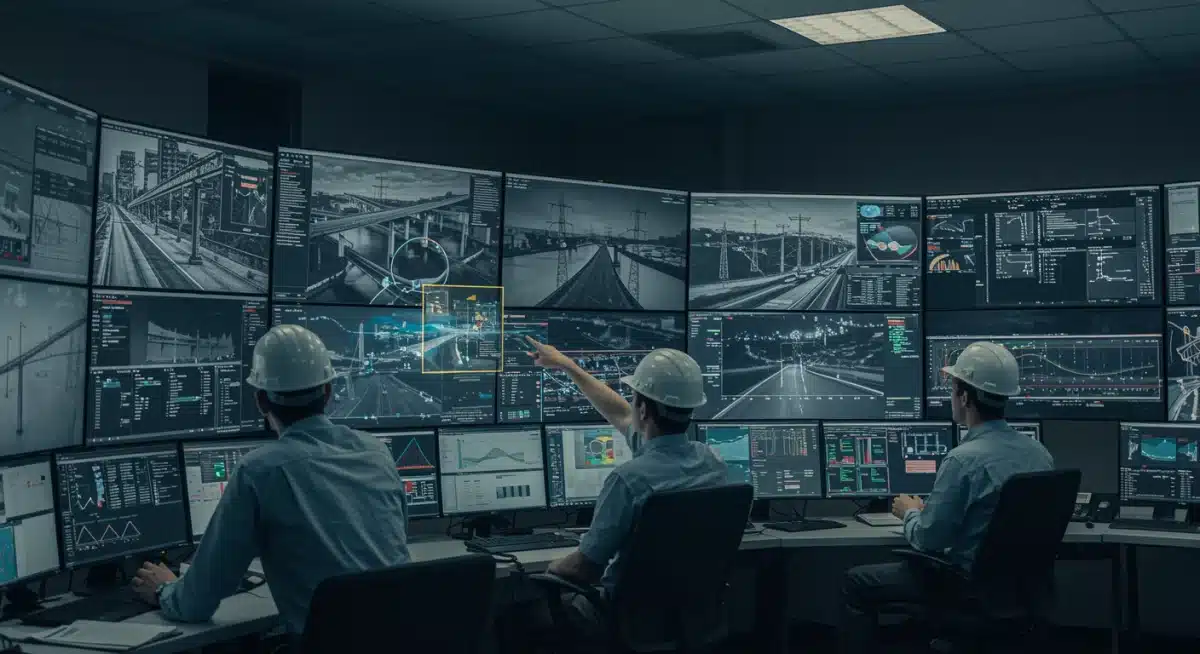
Sensors embedded in bridges, pipelines, and power grids continuously feed information about structural integrity, temperature fluctuations, and stress levels. AI algorithms then process this data, identifying subtle patterns indicative of impending failure.
This allows maintenance teams to act preemptively, replacing components or performing repairs during planned downtime, thereby avoiding disruptive and expensive emergency interventions. The foresight provided by Predictive AI Infrastructure is invaluable.
- Real-time data collection from diverse sources.
- Machine learning models identify subtle failure patterns.
- Optimized maintenance schedules based on actual need.
- Reduced operational costs and increased system longevity.
Key Technologies Powering Predictive AI Infrastructure
The success of Predictive AI hinges on a combination of cutting-edge technologies. These include advanced sensor networks, robust data analytics platforms, and sophisticated machine learning algorithms.
Internet of Things (IoT) devices play a crucial role, providing the continuous stream of data necessary for AI models to learn and predict. This interconnected web of sensors transforms physical infrastructure into intelligent, self-monitoring systems.
Furthermore, cloud computing provides the scalable processing power and storage required to handle the immense volumes of data generated. Without these technological pillars, the ambitious goals of predictive AI would remain out of reach.
Data Acquisition and Analysis
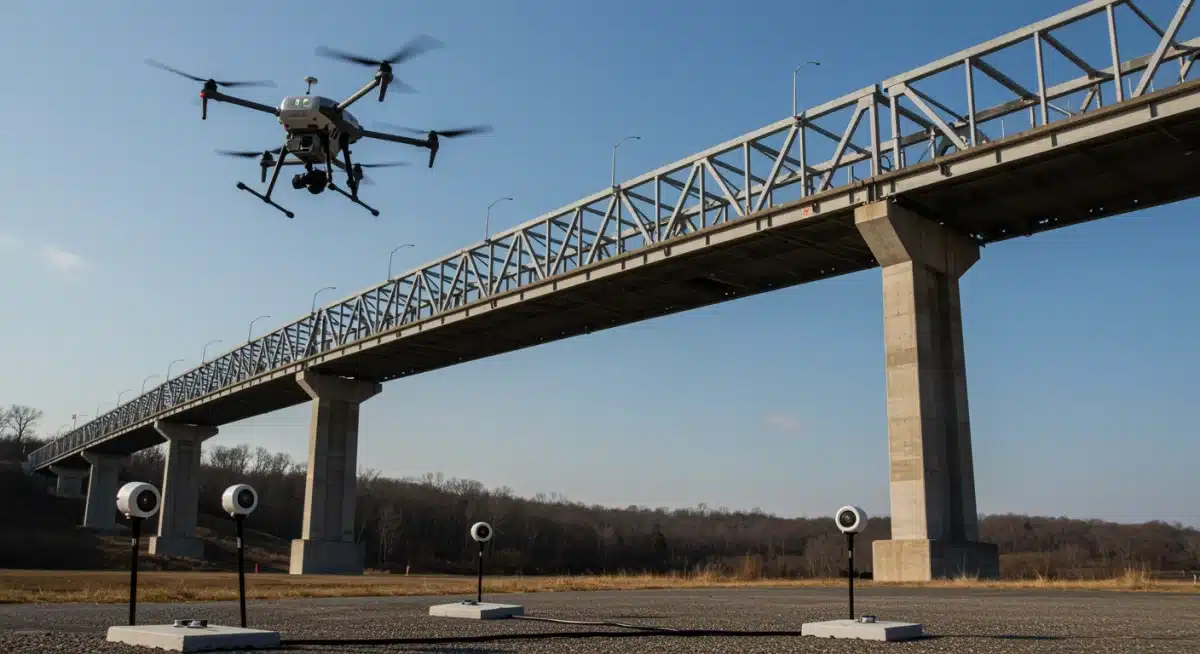
Effective predictive AI relies on comprehensive and accurate data. This data is gathered through a myriad of sources, including smart sensors, satellite imagery, drone inspections, and historical performance logs.
Once collected, this raw data undergoes rigorous processing and cleaning to ensure its quality and relevance. Machine learning algorithms then sift through the prepared data, seeking correlations and anomalies that human analysts might miss.
These algorithms are trained on past failure events and successful maintenance interventions, learning to recognize the precursors to system degradation. The ability of Predictive AI Infrastructure to process and interpret this complex data is its core strength.
- High-resolution sensor deployment for granular data.
- Integration of diverse data types (e.g., thermal, vibration, visual).
- Advanced analytics platforms for pattern recognition.
- Iterative model refinement based on new data and outcomes.
Applications Across U.S. Critical Infrastructure
The scope for Predictive AI is vast, encompassing nearly every sector of critical national assets. From transportation networks to energy grids and water systems, the technology offers tailored solutions.
In transportation, AI monitors bridges, roads, and railways for structural fatigue, preventing collapses or derailments. For energy, it predicts faults in power lines and substations, ensuring a stable and reliable supply.
Water and wastewater systems benefit from AI detecting leaks or pipe corrosion, conserving resources and preventing contamination. Each application demonstrates the versatility and critical importance of Predictive AI Infrastructure.
Enhancing Transportation Safety and Efficiency
America’s transportation backbone, including its vast network of bridges, highways, and rail lines, is constantly under stress. Predictive AI offers a crucial layer of protection, monitoring these assets for signs of wear and tear.
For bridges, AI can detect subtle shifts in structural integrity or material degradation long before they become critical. This allows for scheduled repairs, avoiding emergency closures and costly disruptions to commerce and daily life.
Similarly, in railway systems, the technology can identify track deformities or signal malfunctions, preventing accidents and ensuring the smooth flow of goods and passengers across the nation. The goal is to achieve maximum operational uptime with enhanced safety.
Addressing Challenges in Predictive AI Deployment
While the benefits of Predictive AI are evident, its widespread deployment faces several challenges. These include data privacy concerns, the need for significant initial investment, and the integration with legacy systems.
Ensuring the security and integrity of the vast amounts of data collected is paramount. Robust cybersecurity measures are essential to protect against malicious attacks and unauthorized access, maintaining public trust.
Furthermore, the workforce needs to be trained and upskilled to manage and interpret AI-generated insights, requiring new educational programs and professional development. Overcoming these hurdles is vital for successful implementation.
Overcoming Data Security and Integration Hurdles
The sheer volume and sensitivity of infrastructure data necessitate stringent security protocols. Protecting against cyber threats is a continuous effort, requiring advanced encryption, access controls, and threat detection systems.
Integrating new AI systems with existing, often decades-old, infrastructure requires careful planning and execution. Interoperability standards must be established to ensure seamless communication between disparate systems and technologies.
These technical and organizational challenges are being addressed through collaborative efforts between government agencies, private industry, and academic institutions, aiming to create a resilient and secure framework for Predictive AI Infrastructure.
The Economic and Societal Impact of Proactive Maintenance
The economic benefits of Predictive AI are substantial. By preventing catastrophic failures, the technology avoids billions of dollars in repair costs, economic disruption, and potential legal liabilities.
Furthermore, optimized maintenance schedules reduce operational expenses and extend the lifespan of critical assets, providing a significant return on investment. This fiscal prudence is essential for long-term national planning.
Beyond economics, the societal impact is equally profound. Enhanced infrastructure reliability leads to safer communities, improved public services, and greater confidence in national systems, fostering overall societal well-being.
Cost Savings and Efficiency Gains
One of the most compelling arguments for adopting Predictive AI Infrastructure is its potential for massive cost savings. Emergency repairs are typically far more expensive than planned maintenance, often requiring specialized equipment and rapid deployment.
By anticipating failures, organizations can procure parts in advance, schedule labor during off-peak hours, and perform repairs before they escalate into major crises. This strategic approach minimizes disruption and maximizes resource utilization.
The extended operational life of assets also delays the need for costly replacements, freeing up capital for other vital investments. These efficiency gains contribute significantly to the economic health of the U.S. infrastructure sector.
Regulatory Frameworks and Future Outlook
As Predictive AI gains traction, regulatory bodies are beginning to develop frameworks to govern its use. These regulations aim to ensure ethical deployment, data privacy, and accountability.
Standards for AI model validation and performance are emerging to build trust and ensure reliability. These guidelines are crucial for fostering widespread adoption and ensuring the technology meets its intended objectives.
The future outlook for predictive AI in U.S. infrastructure is optimistic, with ongoing research and development promising even more sophisticated capabilities. Continuous innovation will further enhance the resilience and safety of national assets.
Standardization and Ethical Considerations
The development of standardized protocols for Predictive AI Infrastructure is vital for its broad acceptance and effectiveness. These standards will cover data collection, model development, and system integration, ensuring consistency and interoperability.
Ethical considerations, such as algorithmic bias and decision-making transparency, are also at the forefront of discussions. Ensuring that AI systems are fair and unbiased is critical, especially when decisions impact public safety and resource allocation.
Ongoing dialogues among policymakers, technologists, and industry leaders are shaping these ethical guidelines, aiming to harness the power of AI responsibly. This collaborative approach will define the future landscape of Predictive AI Infrastructure.
The Role of Government and Private Partnerships
The successful implementation of Predictive AI requires strong collaboration between government agencies and private sector innovators. Government provides the regulatory framework and often the large-scale infrastructure assets.
Private companies, meanwhile, bring the technological expertise, research capabilities, and agility to develop and deploy advanced AI solutions. This synergy is essential for accelerating the adoption of these transformative technologies.
Public-private partnerships can facilitate funding, knowledge sharing, and the development of pilot programs that demonstrate the efficacy of predictive AI in real-world scenarios. Such collaborations are key to securing the nation’s future.
Funding and Research Initiatives
Significant investment is necessary to fully realize the potential of Predictive AI Infrastructure. Government funding, alongside private capital, is driving research and development into new AI algorithms, sensor technologies, and data analytics tools.
Research initiatives are exploring ways to make AI models more robust, efficient, and capable of handling increasingly complex data sets. These efforts are pushing the boundaries of what is possible in predictive maintenance.
Furthermore, grants and incentives are encouraging companies to innovate and implement AI solutions across various infrastructure sectors. The commitment to funding and research underscores the national importance placed on Predictive AI Infrastructure.
| Key Point | Brief Description |
|---|---|
| Early Failure Detection | AI identifies potential system failures up to 3 months in advance. |
| Proactive Maintenance | Shifts from reactive repairs to scheduled, preventative interventions. |
| Economic Benefits | Reduces repair costs, extends asset lifespan, and minimizes disruptions. |
| Enhanced Safety | Improves public safety and national security through reliable infrastructure. |
Frequently Asked Questions about Predictive AI for Infrastructure
Predictive AI leverages machine learning algorithms and vast datasets from sensors and historical records to forecast potential failures in infrastructure components. It aims to identify issues up to three months before they become critical, enabling proactive maintenance and preventing costly breakdowns across U.S. infrastructure systems.
By continuously analyzing real-time data from embedded sensors and other sources, predictive AI detects subtle anomalies and patterns indicative of impending failure. This early detection allows maintenance teams to schedule interventions, replace faulty parts, and perform necessary repairs well in advance, averting unexpected system collapses or disruptions.
Predictive AI is highly beneficial for critical infrastructure across various sectors, including transportation (bridges, roads, railways), energy (power grids, pipelines), and water management systems. Any complex system with numerous interconnected components that can generate continuous data stands to gain significantly from its application.
Key challenges include ensuring data security and privacy, integrating AI systems with existing legacy infrastructure, and the substantial initial investment required for sensor networks and data platforms. Additionally, developing a skilled workforce to manage and interpret AI insights is crucial for successful deployment.
The long-term impact is expected to be transformative, leading to significantly more resilient, efficient, and safer infrastructure. It will reduce operational costs, extend asset lifespans, and minimize economic disruptions caused by unexpected failures, ultimately enhancing national security and public confidence in vital systems.
Looking Ahead
The integration of Predictive AI represents a pivotal moment for national resilience. As this technology matures, its capabilities will expand, offering even greater foresight and control over complex systems.
Stakeholders should continue to monitor policy developments, technological advancements, and the outcomes of ongoing pilot projects.
The commitment to innovation in Predictive AI Infrastructure is not merely about maintenance; it is about building a more secure and reliable future for the United States.