Robotics Reducing Logistics Costs by 10% for U.S. Firms in 2026
Efficiency is the new currency in the American supply chain, and Robotics Reducing Logistics Costs by a significant 10% is the headline defining 2026. This shift marks a turning point for U.S. firms seeking to stay competitive in a high-speed market.
The surge in automated warehousing and intelligent fulfillment systems is transforming traditional overhead into lean operational power.
By integrating these autonomous solutions, domestic enterprises are successfully neutralizing labor shortages and minimizing human error across the board.
Strategic adoption of these next-gen technologies is no longer an elective luxury but a fundamental necessity for fiscal health. As 2026 unfolds, monitoring the ROI of these machine-led innovations will be vital for any logistics leader aiming for market dominance.
The Robotic Revolution in Logistics Operations
The logistics sector in the U.S. is undergoing a profound transformation, driven by the rapid advancements in robotics and automation. Firms are increasingly adopting these technologies to streamline processes, enhance accuracy, and, crucially, reduce operational expenditures.
This shift is not merely about replacing human labor but about augmenting capabilities, allowing for higher throughput and more consistent service delivery. The strategic deployment of robotics is becoming a cornerstone of competitive advantage.
Analysts project that Robotics Reducing Logistics Costs will become a dominant theme, with a 10% reduction by 2026 representing a conservative estimate given current innovation rates. This figure underscores the urgency for firms to adapt.
Autonomous Mobile Robots (AMRs) Leading the Charge
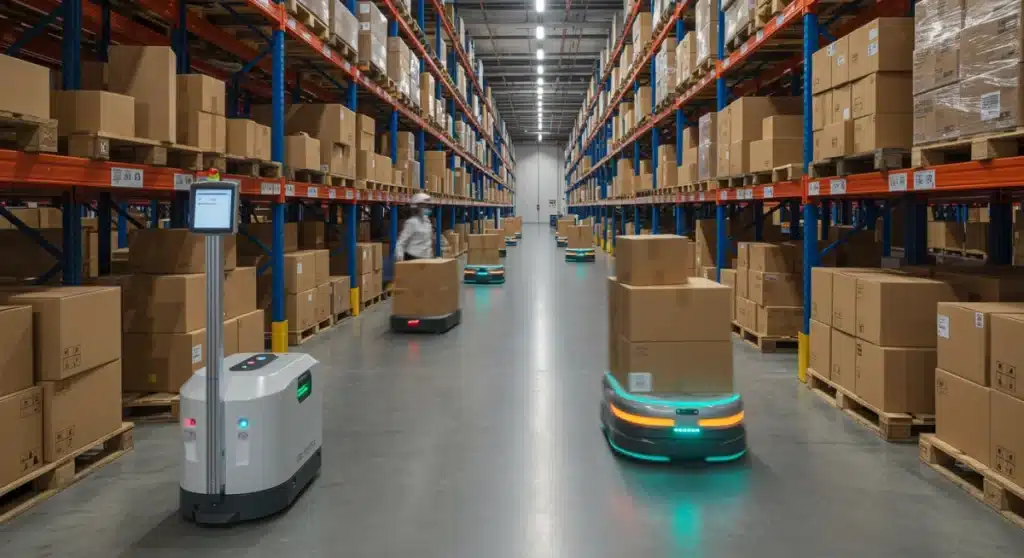
Autonomous Mobile Robots (AMRs) are at the forefront of this robotic revolution, offering unparalleled flexibility and efficiency in warehouse environments.
These intelligent machines can navigate dynamic spaces, transport goods, and assist with inventory management without fixed infrastructure.
Their ability to dynamically adapt to changing layouts and tasks significantly reduces the need for costly infrastructure modifications, making them an attractive investment.
AMRs are proving instrumental in achieving the ambitious goal of Robotics Reducing Logistics Costs by 10%.
The versatility of AMRs allows them to be deployed in various tasks, from picking and packing to long-haul transportation within large facilities. This adaptability translates directly into optimized workflows and decreased manual handling errors.
- Enhanced inventory accuracy and traceability.
- Reduced labor costs associated with repetitive tasks.
- Improved safety by minimizing human interaction with heavy machinery.
- Scalable solutions that adapt to fluctuating demand.
Automated Guided Vehicles (AGVs) for Structured Tasks
While AMRs offer flexibility, Automated Guided Vehicles (AGVs) continue to play a vital role in structured, high-volume material handling operations. AGVs follow predefined paths, making them ideal for repetitive transport tasks between fixed points.
These systems are known for their robustness and reliability, capable of moving heavy loads consistently and efficiently within a controlled environment. The integration of AGVs complements AMR deployments, creating a comprehensive automation strategy.
The predictable nature of AGV operations contributes significantly to operational stability and cost forecasting, supporting the broader objective of Robotics Reducing Logistics Costs. Their consistent performance minimizes disruptions and optimizes resource allocation.
Key Technologies Driving Cost Reduction
The projected 10% reduction in operational costs is not attributed to a single technology but rather a synergistic combination of several advanced robotic systems. Each technology addresses specific logistical challenges, contributing to overall efficiency gains.
Firms are strategically investing in tailored solutions, recognizing that a one-size-fits-all approach is insufficient for complex logistics environments. The careful selection and integration of these technologies are paramount for success.
Understanding the capabilities of each robotic type is critical for U.S. logistics firms aiming to leverage Robotics Reducing Logistics Costs effectively. This informed approach ensures maximum return on investment.
Collaborative Robots (Cobots) for Enhanced Productivity
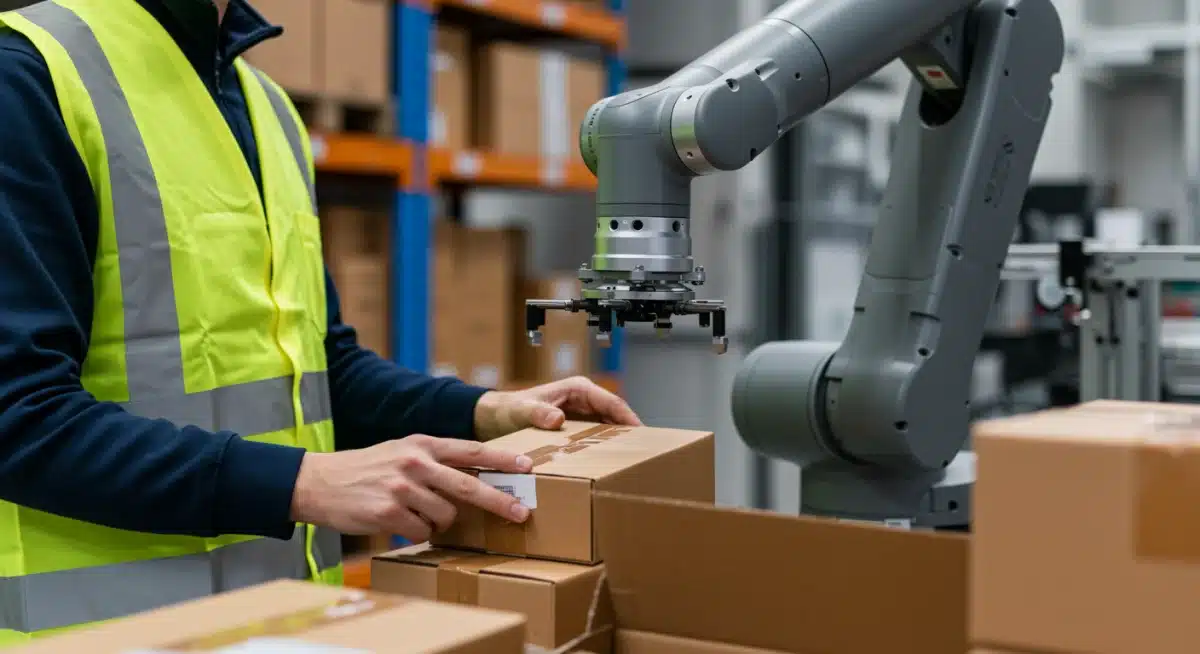
Collaborative robots, or cobots, are designed to work safely alongside human employees, enhancing productivity without requiring extensive safety guarding. They are particularly effective in tasks requiring dexterity and precision, such as picking, packing, and assembly.
Cobots empower human workers by taking over monotonous or ergonomically challenging tasks, allowing personnel to focus on higher-value activities. This partnership optimizes labor utilization and improves job satisfaction.
The flexibility and ease of programming cobots make them an accessible entry point for many firms seeking to implement Robotics Reducing Logistics Costs. Their ability to adapt quickly to new tasks provides significant operational agility.
Automated Storage and Retrieval Systems (AS/RS)
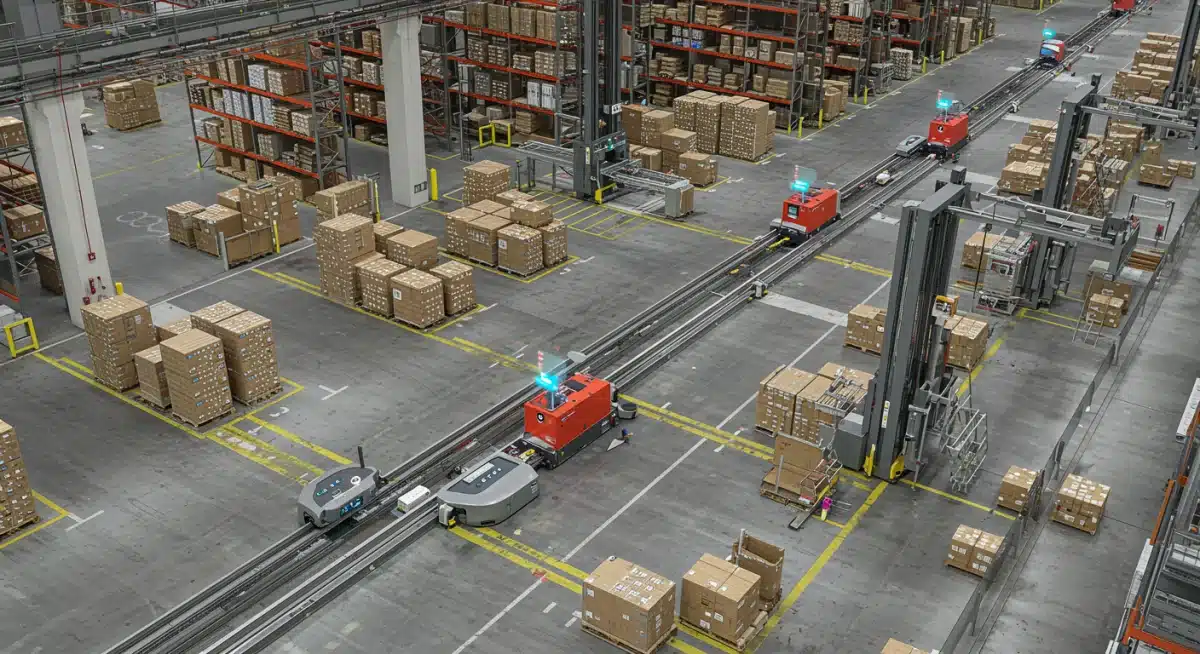
Automated Storage and Retrieval Systems (AS/RS) are pivotal for maximizing warehouse space utilization and accelerating order fulfillment. These systems automatically place and retrieve items from designated storage locations, often in high-density configurations.
By reducing the need for manual retrieval and optimizing storage density, AS/RS significantly cuts down on real estate costs and operational labor. This technology is essential for high-volume distribution centers.
The precision and speed of AS/RS contribute directly to faster order cycles and reduced error rates, reinforcing the goal of Robotics Reducing Logistics Costs by improving overall supply chain responsiveness.
Implementation Challenges and Strategic Solutions
While the benefits of robotic integration are clear, implementing these advanced systems presents its own set of challenges. Firms must navigate hurdles such as initial investment costs, integration complexities, and workforce adaptation.
Successful deployment requires comprehensive planning, robust infrastructure, and a commitment to continuous optimization. Addressing these challenges proactively is key to realizing the full potential of robotics.
U.S. logistics firms must develop clear strategies to overcome these obstacles, ensuring that the path to Robotics Reducing Logistics Costs is smooth and effective. Experience shows careful planning pays off.
Overcoming Initial Investment Hurdles
The upfront capital expenditure for robotic systems can be substantial, posing a barrier for some firms. However, the long-term operational savings and enhanced competitiveness often outweigh these initial costs.
Many robotics providers now offer flexible financing options, including Robotics-as-a-Service (RaaS) models, which allow firms to access advanced automation without large capital outlays. This democratizes access to cutting-edge technology.
Exploring grant opportunities, tax incentives, and strategic partnerships can further mitigate financial risks, making the investment in Robotics Reducing Logistics Costs more feasible for a wider range of businesses.
- Evaluate total cost of ownership over several years.
- Explore RaaS models to convert capital expenditure to operational expenditure.
- Seek government incentives and industry grants for automation.
- Prioritize phased implementation to manage financial outlay.
Integration with Existing Systems
Integrating new robotic systems with legacy warehouse management systems (WMS) and enterprise resource planning (ERP) platforms can be complex. Seamless data exchange is critical for optimal performance and decision-making.
Firms often need to invest in middleware or custom integration solutions to ensure all systems communicate effectively. This step is vital to avoid data silos and ensure a unified operational view.
Working with experienced integration partners and adopting open-standard robotic platforms can significantly reduce integration complexities, accelerating the realization of benefits from Robotics Reducing Logistics Costs.
The Impact on Workforce and Training
The introduction of robotics inevitably impacts the existing workforce, necessitating skill development and job role redefinition. This transition requires careful management to ensure a smooth adaptation and maintain employee morale.
Instead of job displacement, the focus should be on job evolution, where human workers transition to supervisory, maintenance, or more analytical roles. This strategic approach ensures a symbiotic relationship between humans and machines.
Investing in comprehensive training programs is crucial for empowering employees with the new skills required to operate and maintain robotic systems, ensuring successful implementation of Robotics Reducing Logistics Costs initiatives.
Reskilling and Upskilling Initiatives
Logistics firms are increasingly recognizing the importance of reskilling and upskilling their workforce to meet the demands of an automated environment. This includes training in robotics operation, maintenance, and data analysis.
Partnerships with educational institutions and vocational training centers can provide structured programs for employees to acquire these new competencies. This proactive approach fosters a culture of continuous learning.
A well-trained workforce is essential for maximizing the efficiency and uptime of robotic systems, directly contributing to the desired outcome of Robotics Reducing Logistics Costs. Human expertise remains indispensable.
Forecasting the Future: Beyond 2026
The 10% cost reduction by 2026 is just the beginning of a larger trend in logistics automation. Future advancements in artificial intelligence, machine learning, and swarm robotics promise even greater efficiencies and transformative capabilities.
Researchers are exploring more sophisticated robotic interactions, predictive maintenance, and fully autonomous supply chain operations. These innovations will further redefine the landscape of logistics.
U.S. logistics firms that strategically invest in Robotics Reducing Logistics Costs now will be better positioned to capitalize on these future developments, maintaining a competitive edge in a rapidly evolving market.
AI and Machine Learning Integration
The integration of Artificial Intelligence (AI) and Machine Learning (ML) with robotic systems will unlock new levels of optimization. AI-powered robots can learn from their environment, adapt to unforeseen circumstances, and make intelligent decisions in real-time.
This cognitive leap will enable robots to perform more complex tasks, optimize routes, predict maintenance needs, and refine picking strategies with unprecedented accuracy. The synergy between AI and robotics is a powerful accelerator.
These intelligent capabilities will further drive down operational costs, pushing the boundaries of what’s possible in Robotics Reducing Logistics Costs and creating more resilient and responsive supply chains.
Navigating Regulatory and Ethical Considerations
As robotics become more pervasive in logistics, navigating the evolving regulatory landscape and addressing ethical considerations becomes paramount. Issues such as data privacy, safety standards, and job security require careful attention.
Governments, industry associations, and firms must collaborate to establish clear guidelines and best practices. Proactive engagement in policy development ensures that robotic adoption is responsible and sustainable.
Addressing these concerns transparently builds public trust and facilitates the widespread acceptance of Robotics Reducing Logistics Costs. Ethical deployment is as important as technological advancement.
Establishing Safety and Security Protocols
Ensuring the safety of human workers operating alongside robots is a primary concern. Robust safety protocols, including advanced sensor technologies and emergency stop mechanisms, are essential for preventing accidents.
Cybersecurity is another critical aspect, as interconnected robotic systems can be vulnerable to attacks. Protecting sensitive operational data and preventing unauthorized access is vital for maintaining system integrity.
Adhering to international safety standards and implementing comprehensive cybersecurity measures are non-negotiable for firms leveraging Robotics Reducing Logistics Costs. These measures safeguard both personnel and intellectual property.
Strategic Partnerships for Robotic Adoption
Many U.S. logistics firms are finding that strategic partnerships with robotics manufacturers, software developers, and system integrators accelerate their adoption of automation. These collaborations provide access to specialized expertise and technologies.
Partnering can de-risk implementation, offer tailored solutions, and provide ongoing support, which is particularly valuable for firms new to advanced robotics. It allows companies to focus on their core competencies while leveraging external innovation.
These alliances are crucial for navigating the complexities of robotic deployment and maximizing the benefits of Robotics Reducing Logistics Costs. Collaboration fosters innovation and shared success.
Vendor Selection and Ecosystem Development
Choosing the right robotics vendors and developing a supportive ecosystem of technology partners is a critical strategic decision. Firms should evaluate vendors based on their technological capabilities, support services, and long-term vision.
A strong ecosystem ensures that firms have access to the latest innovations, reliable maintenance, and scalable solutions as their needs evolve. This holistic approach supports sustained growth and efficiency.
Careful vendor selection and ecosystem development are foundational to successfully deploying Robotics Reducing Logistics Costs, ensuring that the chosen solutions align with the firm’s strategic objectives and operational requirements.
| Key Point | Brief Description |
|---|---|
| Cost Reduction Target | U.S. logistics firms aim for 10% operational cost reduction by 2026. |
| Key Technologies | AMRs, AGVs, Cobots, and AS/RS are central to achieving efficiency gains. |
| Implementation Challenges | Initial investment, system integration, and workforce training are key hurdles. |
| Future Outlook | AI and ML integration promise further optimization beyond current projections. |
Frequently Asked Questions About Robotics in Logistics
The central objective for U.S. logistics firms is to achieve a 10% reduction in operational costs by 2026. This target is driven by the strategic adoption and integration of advanced robotic technologies across their supply chain operations.
Autonomous Mobile Robots (AMRs), Automated Guided Vehicles (AGVs), Collaborative Robots (Cobots), and Automated Storage and Retrieval Systems (AS/RS) are proving most impactful. Each plays a distinct role in streamlining different aspects of logistics operations.
Key challenges include significant upfront investment costs, complex integration with existing legacy systems, and the crucial need for reskilling and upskilling the current workforce to manage new technologies effectively. These require strategic planning.
Robotics will transform job roles rather than eliminate them, shifting human workers towards supervisory, maintenance, and analytical tasks. Comprehensive training and upskilling programs are essential to facilitate this transition and ensure job evolution.
AI and Machine Learning are pivotal for the future, enabling robots to learn, adapt, and make intelligent decisions in real-time. This integration will lead to further optimization, predictive maintenance, and more resilient, responsive supply chains.
Looking Ahead: The Evolving Landscape
The journey towards Robotics Reducing Logistics Costs is rapidly progressing, with initial successes paving the way for broader adoption.
Firms that proactively embrace these technological shifts are not just cutting costs but also building more agile, resilient, and competitive supply chains.
The ongoing developments in AI and advanced robotics promise even greater efficiencies, making continuous innovation and strategic investment critical for future leadership in the logistics sector.