Sustainable Tech: U.S. Data Centers Achieve 25% Energy Reduction by 2026
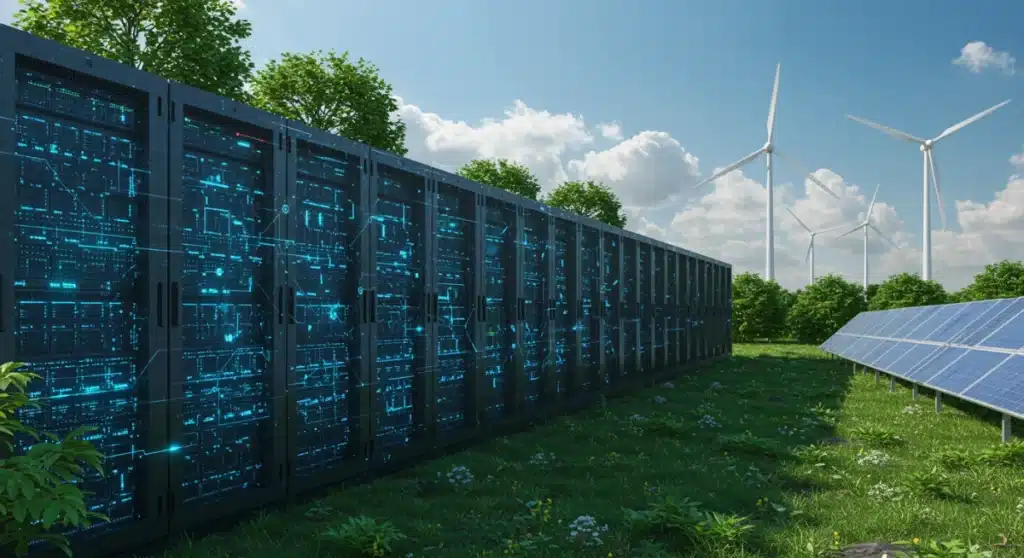
The digital landscape is undergoing a radical shift as U.S. Data Center Energy Reduction targets hit a pivotal 25% milestone this year. This transformation marks a departure from power-hungry legacies toward a streamlined, high-efficiency era of American infrastructure.
Achieving such ambitious power-saving benchmarks requires more than just intent; it demands a total overhaul of cooling systems and server density. These “green” architectural refinements are turning massive facilities into models of resource optimization and fiscal responsibility.
As federal mandates and private innovation converge, monitoring this sustainable evolution becomes essential for tech leaders and investors alike. Discover how the nation’s digital backbone is shedding its carbon weight while maintaining peak performance in a competitive global market.
The Mandate for Sustainable Data Centers
The U.S. government, alongside major tech corporations, has set an aggressive target for U.S. Data Center Energy Reduction.
This commitment underscores a growing recognition of the significant energy consumption associated with digital operations and the urgent need for sustainable practices.
This mandate is not just about reducing carbon footprint; it also aims to enhance grid stability and promote energy independence. The collective effort signifies a pivotal moment for the tech industry, demanding innovative solutions and widespread adoption of green technologies.
Achieving a 25% reduction by 2026 will require a concerted effort from all stakeholders, including data center operators, technology providers, and policymakers. The strategies being deployed are multifaceted, addressing various aspects of energy usage within these critical facilities.
Technological Innovations Driving Efficiency
Several technological advancements are at the forefront of achieving significant U.S. Data Center Energy Reduction. These innovations span hardware, software, and infrastructure design, collectively contributing to a more efficient and sustainable ecosystem.
From advanced cooling systems to more efficient power supplies and intelligent management software, the industry is embracing a holistic approach.
These solutions are designed to minimize waste and maximize the utility of every watt consumed, transforming how data centers operate.
The integration of artificial intelligence and machine learning plays a crucial role in optimizing energy usage, allowing data centers to dynamically adjust power consumption based on demand and environmental conditions. This intelligent management is key to reaching the 2026 target.
Advanced Cooling Systems
Traditional air-cooling methods are notoriously energy-intensive. New liquid cooling technologies, including direct-to-chip and immersion cooling, are proving far more efficient.
These systems directly target heat sources, reducing the need for large, power-hungry HVAC units. The adoption of such advanced cooling is a major factor in the projected U.S. Data Center Energy Reduction.
- Direct-to-chip cooling removes heat directly from processors.
- Immersion cooling submerges servers in dielectric fluid for superior heat transfer.
- These methods significantly lower Power Usage Effectiveness (PUE) ratios.
Energy-Efficient Hardware
The development of more energy-efficient servers, storage devices, and networking equipment is fundamental. Manufacturers are continuously innovating to deliver higher performance with lower power draw.
This includes chips designed for specific workloads, reducing idle power consumption, and optimizing power delivery at the component level. Upgrading to these newer, more efficient components is a straightforward path to U.S. Data Center Energy Reduction.
- Next-generation CPUs and GPUs consume less power per computation.
- Solid-state drives (SSDs) are more energy-efficient than traditional HDDs.
- Modular and scalable server designs allow for optimized resource allocation.
Renewable Energy Integration and Grid Optimization
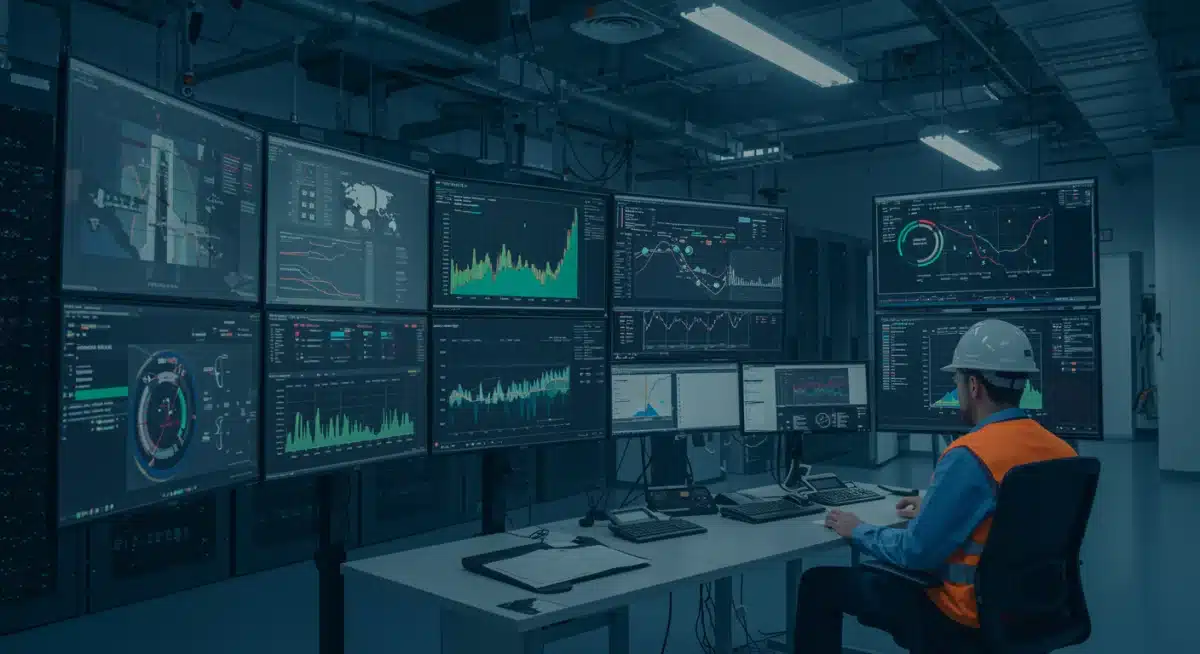
Beyond internal efficiencies, the source of energy powering data centers is equally critical for U.S. Data Center Energy Reduction. There is a growing trend towards integrating renewable energy sources directly into data center operations or through power purchase agreements.
Many data center operators are investing in on-site solar and wind power generation, or procuring renewable energy credits. This shift not only reduces their carbon footprint but also provides a stable, long-term energy supply, mitigating price volatility.
Furthermore, data centers are increasingly participating in demand-response programs, optimizing their energy consumption to align with grid availability and pricing signals.
This strategic interaction with the energy grid enhances overall efficiency and contributes to broader energy sustainability goals.
Policy and Regulatory Frameworks Supporting Reduction
Government policies and regulatory frameworks play a crucial role in incentivizing and enforcing U.S. Data Center Energy Reduction. These measures provide the necessary impetus for data center operators to adopt more sustainable practices and invest in green technologies.
Initiatives such as tax credits for energy-efficient upgrades, carbon pricing mechanisms, and reporting requirements are shaping the landscape. These policies create a favorable environment for sustainable investments and encourage innovation within the sector.
The Department of Energy and the Environmental Protection Agency are actively involved in developing guidelines and standards for data center energy efficiency. Their collaborative efforts ensure that the industry has clear benchmarks and support for achieving the targeted reductions.
Government Incentives and Programs
Federal and state governments offer various incentives to encourage energy efficiency. These can include grants, loans, and tax breaks for data centers that implement sustainable technologies or achieve specific energy reduction milestones.
Programs like ENERGY STAR for data centers provide benchmarks and recognition for top performers, fostering a competitive environment for sustainability. These incentives make the financial case for investing in U.S. Data Center Energy Reduction even stronger.
- Tax credits for renewable energy installations.
- Grants for research and development of green data center technologies.
- Certification programs recognizing energy-efficient operations.
Standardization and Reporting
The establishment of industry-wide standards and mandatory reporting requirements ensures accountability and transparency. Data centers are increasingly required to report on their Power Usage Effectiveness (PUE) and other key energy metrics.
This data allows for benchmarking and identifies areas for improvement, driving continuous optimization efforts. Standardized reporting is essential for tracking progress towards the U.S. Data Center Energy Reduction goal.
The development of common metrics helps compare performance across different facilities and promotes best practices. This transparency fosters a culture of continuous improvement and innovation.
Challenges and Overcoming Obstacles
While the commitment to U.S. Data Center Energy Reduction is strong, significant challenges remain. These include the upfront costs of new technologies, the complexity of integrating diverse systems, and the rapid growth in data demand.
Overcoming these obstacles requires strategic planning, significant investment, and collaborative efforts across the industry. Data center operators must balance the need for sustainability with the imperative to maintain high performance and reliability.
Addressing these challenges effectively will be crucial for achieving the 25% energy reduction target by 2026. Innovation in financing models and operational strategies will play a key role in surmounting these hurdles.
The Role of AI and Machine Learning in Optimization
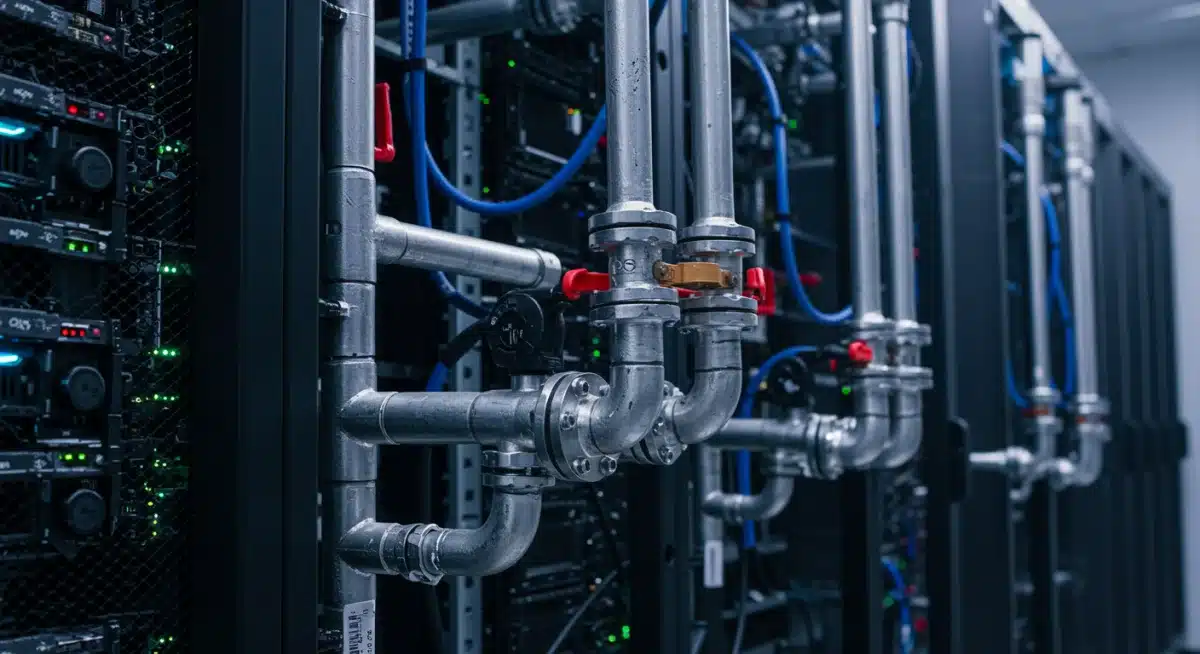
Artificial intelligence and machine learning are revolutionizing how data centers manage their energy consumption, proving indispensable for achieving U.S. Data Center Energy Reduction.
These technologies enable predictive analytics and real-time optimization of various data center functions.
AI algorithms can analyze vast amounts of operational data, identifying inefficiencies and suggesting precise adjustments to cooling, power distribution, and workload management. This intelligent automation leads to significant energy savings that would be impossible with traditional methods.
By continuously learning from operational patterns, AI systems can anticipate demand fluctuations and optimize resource allocation proactively. This dynamic adjustment is a game-changer for maintaining high efficiency levels while ensuring uninterrupted service.
Predictive Analytics for Energy Management
AI-driven predictive analytics can forecast energy demand based on historical data, weather patterns, and planned workloads. This allows data center operators to make informed decisions about power provisioning and cooling adjustments, preventing over-provisioning and waste.
Such foresight helps in optimizing generator usage and integrating renewable energy sources more effectively. The precision offered by predictive models is critical for maximizing U.S. Data Center Energy Reduction efforts.
By understanding future needs, data centers can schedule maintenance and upgrades during periods of low demand, further contributing to overall efficiency. This proactive approach minimizes energy waste.
Automated Optimization Systems
Machine learning algorithms power automated systems that can adjust cooling setpoints, server utilization, and power distribution in real-time. These systems respond instantly to changes in environmental conditions and workload demands.
This level of automation ensures that data centers are always operating at peak energy efficiency, without human intervention. Automated optimization is a cornerstone of achieving the aggressive U.S. Data Center Energy Reduction goals.
Such systems continuously monitor thousands of data points, making micro-adjustments that cumulatively lead to substantial energy savings. They represent a significant leap forward in data center management.
Future Outlook and Long-Term Sustainability
The journey towards U.S. Data Center Energy Reduction is an ongoing process, with the 2026 target serving as a significant milestone rather than an endpoint. The industry is already looking beyond this goal, planning for even greater sustainability in the long term.
Future initiatives will likely involve further advancements in quantum computing, edge computing, and even more sophisticated AI-driven optimization techniques.
The commitment to reducing environmental impact is becoming a core tenet of data center design and operation.
The continued collaboration between government, industry, and research institutions will be vital in pioneering new solutions and maintaining momentum.
The long-term vision is to create a truly carbon-neutral or even carbon-negative data center infrastructure, setting a global benchmark for sustainable tech.
| Key Initiative | Impact on Energy Reduction |
|---|---|
| Advanced Cooling | Significantly lowers energy needed for thermal management. |
| Renewable Energy | Reduces carbon footprint by sourcing clean power. |
| AI Optimization | Enables real-time efficiency adjustments and predictive management. |
| Policy & Incentives | Drives investment and adoption of green technologies. |
Frequently Asked Questions About Data Center Energy Reduction
The primary goal is to achieve a 25% reduction in energy consumption by U.S. data centers by the year 2026. This ambitious target is part of a broader commitment to sustainable tech and reducing the environmental impact of digital infrastructure across the nation.
Key technologies include advanced cooling systems like liquid and immersion cooling, energy-efficient hardware, and the integration of artificial intelligence and machine learning for operational optimization. These innovations are critical for maximizing energy savings and improving overall efficiency.</n
Government policies provide crucial support through incentives such as tax credits for green tech adoption, grants for research and development, and mandatory reporting standards. These measures encourage data center operators to invest in sustainable practices and accelerate energy reduction efforts.
Renewable energy integration is vital, either through on-site generation or power purchase agreements. Shifting away from fossil fuels to sources like solar and wind power significantly reduces the carbon footprint of data centers, contributing directly to the overall energy reduction goals.
Key challenges include the high upfront costs of implementing new sustainable technologies, the complexity of integrating diverse systems, and the continuous growth in data demand. Overcoming these requires strategic investments, innovative financing, and ongoing industry collaboration.
Looking Ahead
The journey towards a 25% U.S. Data Center Energy Reduction by 2026 is a testament to the industry’s commitment to sustainable tech. This critical endeavor is reshaping the digital landscape, pushing the boundaries of innovation and operational efficiency.
As the deadline approaches, the focus remains on scaling successful initiatives and fostering continued collaboration among all stakeholders.
This collective effort ensures that the digital infrastructure of the United States becomes a model for environmental responsibility and technological advancement.
The impact of these efforts extends beyond energy savings, contributing to a more resilient power grid and a healthier planet. The ongoing developments in this sector will undoubtedly set new benchmarks for global sustainability in the tech industry.