The 3 Critical AI Policy Changes in the U.S. Affecting Automation Adoption by Mid-2026
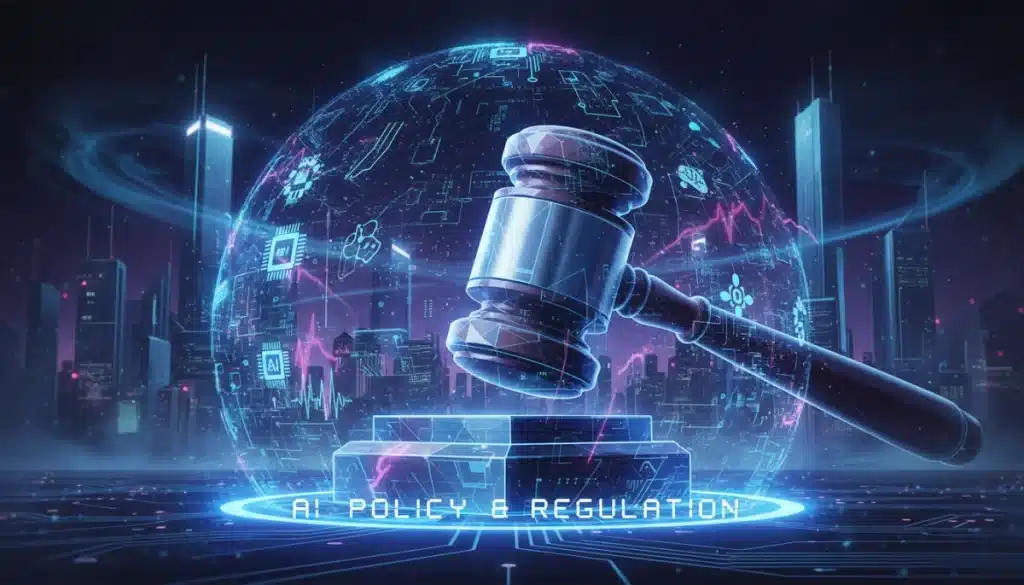
The landscape of digital transformation is shifting rapidly as the US AI Policy Changes of 2026 take center stage. These federal updates are fundamentally rewriting the rules for how businesses integrate intelligent systems into their daily operations.
Recent legislative frameworks aim to streamline infrastructure approvals while establishing national standards that preempt a patchwork of local regulations.
This unified federal approach is designed to accelerate the deployment of advanced robotics and machine learning across the American economy.
As these governance shifts take hold, stakeholders must monitor new compliance frontiers and tax incentives tailored for modernization.
Staying ahead of these regulatory milestones will be the defining factor for successful institutional scaling through the end of the year.
Understanding the Looming Regulatory Frameworks
The United States is on the cusp of significant shifts in its approach to artificial intelligence, with legislative and executive actions expected to coalesce into definitive policy by mid-2026.
These forthcoming regulations are not merely theoretical; they represent concrete steps that will directly influence how industries integrate and leverage AI-driven automation.
Policymakers are grappling with the dual challenge of fostering innovation while mitigating risks associated with unchecked AI development.
The balance struck in these policies will determine the pace and ethical boundaries of automation adoption across various sectors, from manufacturing to healthcare.
Businesses and technologists alike are keenly observing these developments, recognizing that proactive engagement and adaptation will be crucial for navigating the new regulatory environment.
The implications for investment, talent acquisition, and operational strategies are substantial.
The First Critical Policy Change: Data Privacy and AI Ethics Standards
One of the most impactful shifts will come from new federal standards regarding data privacy and AI ethics.
Expect comprehensive legislation that moves beyond fragmented state-level efforts, establishing a unified framework for how AI systems collect, process, and utilize personal data.
This policy change aims to instill greater public trust in AI technologies by mandating transparency, accountability, and fairness in algorithmic decision-making.
Companies deploying AI will face stricter requirements for explaining their algorithms and ensuring non-discriminatory outcomes.
The ethical guidelines are anticipated to address issues such as algorithmic bias, data security, and the human oversight of autonomous systems.
These measures will directly influence the design and deployment of automated solutions, particularly in sensitive areas like hiring, credit scoring, and public safety.
Establishing a Federal Data Privacy Law
For years, the U.S. has lacked a singular federal data privacy law, leading to a patchwork of regulations like the California Consumer Privacy Act (CCPA).
The impending policy aims to consolidate these efforts, providing a clear, nationwide standard for data handling.
This standardization will simplify compliance for businesses operating across state lines but will also introduce new obligations, particularly for smaller enterprises.
The focus will be on consumer rights, including data access, portability, and the right to opt-out of certain data processing activities by AI systems.
- Consumer Data Rights: Enhanced rights for individuals to control their personal data used by AI.
- Data Minimization: Mandates for AI systems to collect only necessary data, reducing privacy risks.
- Cross-Industry Compliance: Uniform standards simplifying operations for national businesses.
Mandating Algorithmic Transparency and Explainability
A key component of the ethical AI framework will be the requirement for algorithmic transparency and explainability.
This means that AI systems, especially those making consequential decisions, must be able to articulate how they arrived at a particular outcome.
This policy aims to combat the ‘black box’ problem of AI, where complex algorithms operate without clear human understanding of their internal logic.
Industries adopting automation will need to integrate explainable AI (XAI) tools to meet these new compliance benchmarks.
- Bias Detection Tools: Companies must implement systems to identify and mitigate algorithmic bias.
- Impact Assessments: Mandatory assessments for high-risk AI applications to foresee societal impacts.
- Human-in-the-Loop: Emphasis on maintaining human oversight for critical automated processes.
The Second Critical Policy Change: Workforce Adaptation and Reskilling Initiatives
The rapid advancement of AI and automation inevitably raises concerns about job displacement and the need for a skilled workforce.
The second critical set of AI policy changes will focus on comprehensive federal programs aimed at workforce adaptation and reskilling.
These initiatives are designed to cushion the economic impact of automation, ensuring that American workers are equipped with the necessary skills for the jobs of the future.
Expect significant investments in educational programs, vocational training, and public-private partnerships.
The goal is not to halt automation but to manage its transition effectively, turning potential job losses into opportunities for upskilling and new career paths.
This proactive approach is vital for maintaining economic stability and social equity amidst technological disruption, directly impacting US AI Policy Changes.
Federal Funding for AI Education and Training
A substantial allocation of federal funds is expected to bolster AI education from K-12 to higher education and vocational training.
This includes grants for universities to develop AI curricula and for community colleges to offer specialized automation-related certifications.
The emphasis will be on creating accessible pathways for workers to acquire skills in AI development, maintenance, and oversight.
These programs will target both displaced workers and those looking to advance their careers in an AI-driven economy.
Incentives for Employer-Led Reskilling Programs
To encourage private sector involvement, the government is likely to introduce tax incentives and grants for companies that invest in reskilling their existing workforce for AI-compatible roles.
This policy aims to foster a shared responsibility between employers and the government in preparing for the future of work.
These incentives will likely favor programs that demonstrate a clear pathway to employment and address specific skill gaps identified by industry.
Such policies will make automation adoption more palatable for businesses by reducing the cost of workforce transition.
The Third Critical Policy Change: National AI Infrastructure and Research Investment
The third pivotal area of policy change concerns bolstering the nation’s AI infrastructure and significantly increasing investment in fundamental AI research.
Recognizing AI as a strategic national imperative, the U.S. government is poised to dedicate substantial resources to maintaining its competitive edge globally.
This includes funding for advanced computing facilities, data repositories, and secure testing environments for AI technologies.
Such investments are crucial for accelerating innovation and ensuring that the U.S. remains at the forefront of AI development, impacting US AI Policy Changes.
The focus extends beyond mere technological advancement to include the ethical and secure deployment of AI, particularly in critical sectors.
This strategic investment will shape the foundational capabilities upon which future automation adoption will be built across industries.
Expanding National AI Research Institutes
Expect to see the expansion of existing National AI Research Institutes and the establishment of new ones, fostering collaboration between academia, industry, and government.
These institutes will serve as hubs for cutting-edge research, addressing both theoretical and practical challenges in AI.
The research agenda will likely prioritize areas such as trustworthy AI, human-centered AI, and AI for scientific discovery.
This collaborative ecosystem is vital for generating the foundational knowledge necessary to support advanced automation.
Promoting Secure and Ethical AI Development
Alongside innovation, there will be a strong emphasis on developing secure and ethical AI systems from the ground up.
Policies will encourage research into AI safety, cybersecurity for AI, and methods for detecting and preventing malicious AI use.
This commitment to responsible AI development is not just about compliance but also about building public trust and ensuring the long-term societal benefits of automation. It represents a crucial aspect of US AI Policy Changes by mid-2026.
Impact on Automation Adoption Across Industries
These three critical AI policy changes will profoundly reshape automation adoption across diverse U.S. industries.
From manufacturing and logistics to healthcare and finance, businesses will need to re-evaluate their AI strategies in light of the new regulatory landscape.
The enhanced focus on data privacy and ethics will necessitate more robust compliance frameworks and a greater emphasis on explainable AI, potentially slowing some deployments but ensuring greater public acceptance.
Workforce adaptation programs will be critical in mitigating skill gaps and facilitating smoother transitions.
Ultimately, these policies aim to create a more resilient, ethical, and innovation-driven environment for AI and automation.
Companies that proactively align with these emerging standards will be best positioned to capitalize on the benefits of advanced automation while navigating the complexities of the new regulatory era.

Navigating the New Regulatory Landscape for Businesses
For businesses looking to adopt or expand their use of automation, understanding and adapting to these policy changes will be paramount.
The proactive integration of ethical AI principles and investing in workforce development will transition from desirable practices to regulatory necessities.
Companies should begin by auditing their current AI deployments against anticipated data privacy and ethical guidelines.
This includes reviewing data collection practices, algorithmic decision-making processes, and ensuring proper human oversight, crucial considerations for US AI Policy Changes.
Furthermore, engaging with federal and state-level workforce development programs can provide valuable resources for upskilling employees.
This strategic alignment will not only ensure compliance but also foster a more prepared and capable workforce for the automated future.
Compliance and Strategic Planning
The impending regulations demand a strategic approach to compliance, moving beyond reactive measures.
Businesses must integrate legal and ethical considerations into the very design and deployment phases of their AI and automation projects.
This involves establishing internal governance structures, conducting regular AI impact assessments, and fostering a culture of responsible AI.
Early strategic planning will minimize the risk of non-compliance and avoid costly retrofitting of AI systems.
- Internal Audits: Regularly assess AI systems for compliance with privacy and ethical standards.
- Legal Counsel: Engage with legal experts specializing in AI law to navigate new regulations.
- Ethical AI Frameworks: Develop and implement internal guidelines for responsible AI development.
Investment in Human Capital
The emphasis on workforce adaptation means that businesses cannot view automation in isolation from their human employees.
Investment in reskilling and upskilling programs will become a critical component of successful automation adoption, influenced by US AI Policy Changes.
This includes identifying new roles created by automation, training existing staff for these roles, and fostering a culture of continuous learning.
Companies that prioritize human capital development will gain a significant competitive advantage.
- Skill Gap Analysis: Identify future skill needs for AI-driven roles within the organization.
- Training Partnerships: Collaborate with educational institutions for specialized AI training.
- Internal Mobility Programs: Facilitate employee transitions to new roles created by automation.
The Role of Government in Shaping AI’s Future
The U.S. government’s multifaceted approach underscores its commitment to shaping a future where AI serves societal good while driving economic growth. These policy changes are a clear signal that a hands-off approach to AI development is no longer viable.
By investing in research, establishing ethical guardrails, and preparing the workforce, the government aims to create a robust ecosystem for AI innovation.
This proactive stance is designed to ensure that the U.S. remains a global leader in AI, with benefits distributed broadly across the population.
The ongoing dialogue between government, industry, and civil society will be crucial in refining these policies as AI technology continues to evolve.
The adaptability of these frameworks will be key to their long-term effectiveness in managing automation adoption.
| Key Policy Area | Brief Description |
|---|---|
| Data Privacy & Ethics | Federal standards for data use, algorithmic transparency, and bias mitigation in AI. |
| Workforce Adaptation | Programs and incentives for reskilling workers to meet AI-driven job demands. |
| AI Infrastructure & Research | Increased federal investment in AI research, computing, and secure development. |
| Automation Adoption | These policies collectively steer the ethical and efficient integration of AI automation. |
Frequently Asked Questions About US AI Policy Changes
The primary goals are to foster responsible AI innovation, protect individual privacy, ensure ethical deployment of AI systems, and prepare the American workforce for an AI-driven economy. These policies aim to balance technological advancement with societal well-being and national security concerns.
Small businesses may face initial compliance challenges with new data privacy and ethical AI standards. However, federal support for workforce reskilling and clearer national guidelines could also provide resources and a more predictable environment for adopting AI solutions, reducing long-term uncertainty.
Explainable AI (XAI) will become crucial, particularly for AI systems making high-stakes decisions. New policies are expected to mandate transparency, requiring companies to demonstrate how their algorithms reach conclusions, thereby ensuring accountability and mitigating bias in automated processes.
The policies will address job displacement through significant investments in federal workforce training programs, vocational education, and incentives for businesses to reskill their employees. The aim is to transition workers into new roles created by AI and automation, rather than merely displacing them.
While legislative discussions are ongoing, major components of these critical AI policy changes are anticipated to be fully implemented and take full effect by mid-2026. Businesses should monitor legislative progress and begin preparing for these shifts now to ensure smooth adaptation and compliance.
Looking Ahead: The Future Landscape of AI Adoption
The impending US AI Policy Changes by mid-2026 represent a pivotal moment for artificial intelligence and automation adoption across the nation.
These policy shifts signal a maturing regulatory environment that seeks to harness AI’s transformative power while safeguarding societal interests.
Businesses, academic institutions, and the public must remain vigilant and adaptable.
Proactive engagement with these evolving policies, coupled with strategic investments in technology and human capital, will be essential for navigating the opportunities and challenges presented by the future of AI in the United States.