Insider Report: US Companies Cut Costs 20% with Intelligent Automation by 2026

The pursuit of Intelligent Automation Cost Reduction is reshaping the American landscape, with firms projected to slash operational spending by 20% by 2026. This shift marks a definitive move toward hyper-efficient, AI-driven business models.
By integrating autonomous workflows and cognitive processing, organizations are effectively eliminating systemic waste. This transition allows leaders to pivot from manual bottlenecks to high-velocity scalability while maintaining a leaner bottom line.
As these digital transformation strategies mature, the competitive divide is becoming clearer. Staying informed on these algorithmic breakthroughs is now vital for navigating the rapidly evolving corporate economy in the United States.
The Strategic Imperative for Intelligent Automation Cost Reduction
US companies face persistent pressures to optimize their financial performance and maintain a competitive edge in a dynamic global market.
Intelligent automation emerges as a critical strategic lever, offering not just incremental improvements but transformative cost savings.
The drive for a 20% cost reduction by January 2026 is a direct response to rising operational costs, talent shortages, and the need for greater agility. Businesses are recognizing that traditional efficiency measures are no longer sufficient to meet these evolving demands.
This strategic imperative is reshaping investment priorities, with significant capital being directed towards sophisticated automation platforms and AI technologies.
The goal is to build resilient, cost-effective operations capable of navigating future economic uncertainties.
Understanding the 20% Cost Reduction Target
Achieving a 20% cost reduction is not a minor adjustment; it represents a significant overhaul of existing operational models. This target is based on comprehensive analyses of process inefficiencies, labor costs, and the potential for automation to eliminate redundant tasks.
The report highlights that this reduction is largely attainable through a combination of enhanced process efficiency, reduced error rates, and optimized resource allocation.
Companies are leveraging intelligent automation to identify bottlenecks and implement solutions that yield measurable financial gains.
This ambitious target reflects a mature understanding of intelligent automation’s capabilities. It signifies a move from reactive problem-solving to proactive strategic planning, positioning automation as a cornerstone of future business growth and profitability.
- Process optimization through RPA and AI.
- Reduction in manual labor and associated costs.
- Improved accuracy, leading to fewer errors and rework.
- Faster execution of tasks, boosting overall productivity.
Key Sectors Leading the Charge in Intelligent Automation
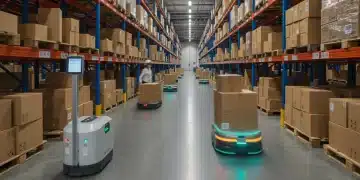
Several sectors are at the forefront of adopting intelligent automation, demonstrating early successes and providing blueprints for broader industry adoption. Financial services, healthcare, and manufacturing are notably accelerating their automation initiatives.
These industries, characterized by high volumes of repetitive tasks, stringent regulatory requirements, and complex data processing, are ideal candidates for intelligent automation. Their early achievements are inspiring other sectors to follow suit.
The report details specific case studies within these leading sectors, showcasing how intelligent automation is being applied to achieve significant cost reductions.
These examples provide practical insights into successful implementation strategies and the tangible benefits realized.
Financial Services: Streamlining Operations and Compliance
In financial services, intelligent automation is transforming back-office operations, customer service, and compliance processes. Banks and insurance companies are using RPA to automate data entry, reconciliation, and claims processing, significantly reducing operational costs.
AI-powered solutions are enhancing fraud detection, risk assessment, and personalized customer interactions, leading to both cost savings and improved service quality. The ability to automate repetitive, rules-based tasks frees up human employees to focus on more strategic initiatives.
This sector’s embrace of intelligent automation is also driven by the need to navigate an increasingly complex regulatory landscape.
Automation ensures consistent compliance, reducing the risk of penalties and associated costs, thereby contributing to the overall Intelligent Automation Cost Reduction.
- Automated data entry and reconciliation.
- AI-driven fraud detection and risk assessment.
- Enhanced regulatory compliance with reduced human error.
- Personalized customer service through chatbots and virtual assistants.
Healthcare: Enhancing Efficiency and Patient Care
The healthcare sector is leveraging intelligent automation to address administrative burdens, improve operational efficiency, and ultimately enhance patient care. Automation is being applied to appointment scheduling, billing, and electronic health record management.
Beyond administrative tasks, AI and machine learning are supporting clinical decision-making, optimizing resource allocation, and streamlining supply chain management within hospitals and clinics.
These applications directly contribute to significant cost savings while improving service delivery.
The report highlights how intelligent automation is enabling healthcare providers to manage increasing patient volumes more effectively, reduce overheads, and reallocate resources to frontline care.
This strategic adoption is critical for the sector’s financial health and service quality, driving a substantial Intelligent Automation Cost Reduction.
Manufacturing: Optimizing Production and Supply Chains
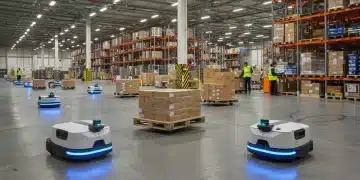
Manufacturing companies are utilizing intelligent automation to optimize production lines, manage inventory, and streamline their complex supply chains. RPA and AI are being integrated into various stages, from raw material procurement to finished product delivery.
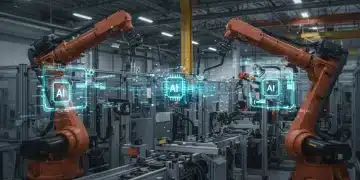
Automation helps in predictive maintenance, quality control, and demand forecasting, leading to reduced downtime, minimized waste, and improved overall production efficiency. These improvements directly translate into significant cost savings and enhanced profitability.
The report emphasizes how intelligent automation is creating more agile and responsive manufacturing operations, capable of adapting quickly to market changes and customer demands.
This strategic implementation is crucial for maintaining competitiveness and achieving the ambitious cost reduction targets.
Leading organizations are integrating automated production line monitoring and control to ensure peak operational performance in real-time. By pairing this with predictive maintenance, companies can drastically reduce equipment downtime and avoid costly emergency repairs.
Furthermore, these systems enable optimized inventory management and precise demand forecasting, which work in tandem with streamlined supply chain logistics to drive maximum cost efficiency across the board.
The Role of AI and RPA in Intelligent Automation Cost Reduction
The core of intelligent automation lies in the synergistic application of Artificial Intelligence (AI) and Robotic Process Automation (RPA). These technologies are not merely tools but foundational elements driving the projected 20% cost reduction by January 2026.
RPA handles repetitive, rule-based tasks with high accuracy and speed, freeing human workers from mundane activities. AI, on the other hand, provides the cognitive capabilities, enabling systems to learn, adapt, and make informed decisions, expanding the scope of automation significantly.
Together, AI and RPA create powerful intelligent automation solutions that can tackle complex processes, analyze vast amounts of data, and continuously optimize operations.
This combination is proving instrumental in achieving substantial financial efficiencies and driving Intelligent Automation Cost Reduction.
RPA: Automating Repetitive Tasks for Immediate Gains
Robotic Process Automation (RPA) serves as the entry point for many companies embarking on their automation journey. It automates high-volume, repetitive tasks that typically consume significant human effort and resources.
By deploying software robots to mimic human interactions with digital systems, RPA quickly delivers tangible benefits such as reduced processing times, improved data accuracy, and lower operational costs.
Its ease of implementation and rapid return on investment make it an attractive option for initial cost-cutting initiatives.
The report indicates that companies are strategically identifying processes ripe for RPA, focusing on areas with clear, measurable outcomes. This targeted approach ensures that initial automation efforts directly contribute to the overall Intelligent Automation Cost Reduction goals.
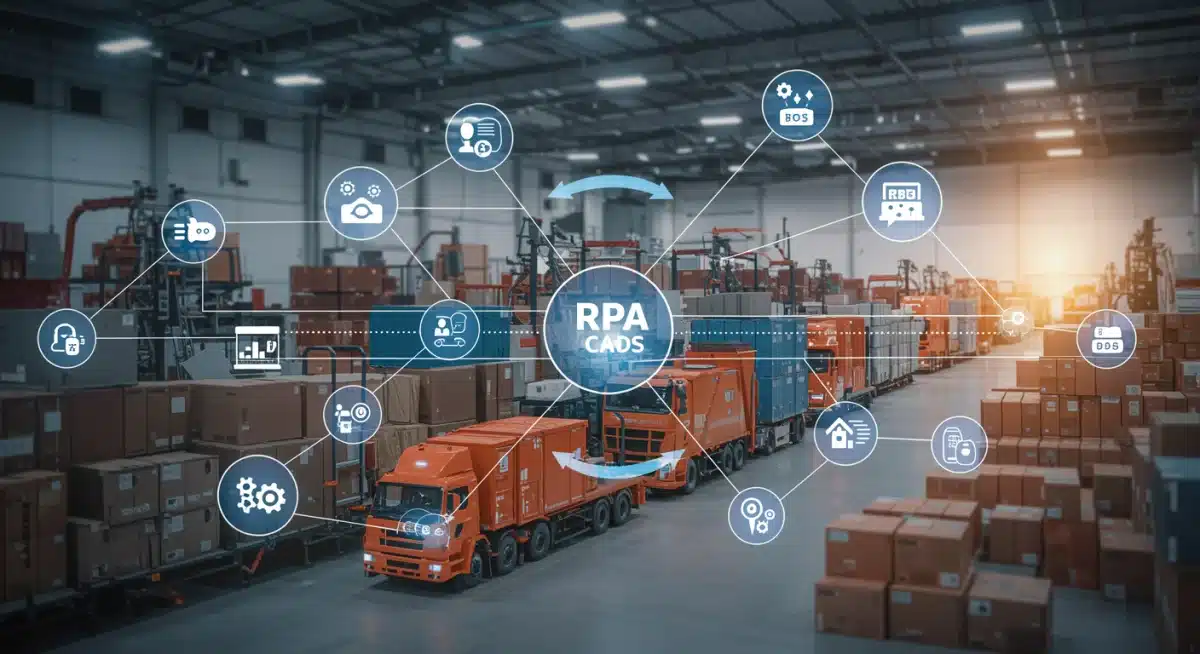
Beyond the factory floor, companies are rapidly automating data entry and extraction to eliminate manual errors and accelerate administrative speed.
This efficiency extends to the finance department, where streamlining invoice processing and payment reconciliation ensures faster cycles and improved cash flow.
Simultaneously, businesses are managing customer service inquiries with standardized responses to provide instant support while generating routine reports and analyses automatically.
This holistic approach to back-office tasks allows the workforce to focus on strategic growth rather than repetitive maintenance.
Overcoming Challenges in Intelligent Automation Implementation
While the benefits of intelligent automation are clear, companies also face challenges in their implementation journey. These include integrating legacy systems, managing change within the organization, and ensuring data security and governance.
Successful companies, as highlighted in the report, are addressing these challenges through careful planning, robust governance frameworks, and a focus on upskilling their workforce. They recognize that intelligent automation is as much about people and processes as it is about technology.
Effective change management and clear communication are crucial to foster employee acceptance and engagement.
Companies are investing in training programs to equip their staff with the skills needed to work alongside automated systems, ensuring a smooth transition and maximizing the benefits of Intelligent Automation Cost Reduction.
Data Security and Governance in an Automated Landscape
As intelligent automation systems handle sensitive data and critical processes, ensuring robust data security and governance is paramount. Companies must implement comprehensive security protocols and compliance frameworks to protect information and maintain trust.
The report emphasizes the importance of designing automation solutions with security in mind from the outset, incorporating encryption, access controls, and regular audits.
Adherence to industry standards and regulatory requirements is not optional but a fundamental prerequisite for successful deployment.
Addressing these concerns proactively builds confidence in intelligent automation technologies and mitigates potential risks. This strategic focus ensures that the pursuit of Intelligent Automation Cost Reduction does not compromise data integrity or regulatory compliance.
- Implementing end-to-end encryption for data in transit and at rest.
- Establishing strict access controls and user authentication.
- Conducting regular security audits and vulnerability assessments.
- Ensuring compliance with data protection regulations (e.g., GDPR, CCPA).
Future Outlook: Sustaining Intelligent Automation Cost Reduction Beyond 2026
The 20% cost reduction by January 2026 is merely a milestone, not the ultimate destination for US companies embracing intelligent automation. The future outlook involves sustaining these gains and continuously seeking new opportunities for optimization.
Companies are already exploring advanced applications of AI, such as hyperautomation, to integrate various technologies and automate even more complex end-to-end processes. This continuous evolution ensures that automation remains a powerful driver of efficiency and cost savings.
The report suggests that organizations will increasingly focus on creating an automation-first culture, where every process is evaluated for its automation potential.
This proactive mindset will be key to maintaining a competitive edge and extending the benefits of Intelligent Automation Cost Reduction well into the future.
The Rise of Hyperautomation and Process Mining
Hyperautomation, the next evolution of intelligent automation, involves combining multiple advanced technologies like RPA, AI, machine learning, and process mining to automate virtually any repeatable business process. This integrated approach promises even greater efficiencies.
Process mining tools are becoming indispensable, allowing companies to discover, monitor, and improve real-world business processes by extracting knowledge from event logs. This data-driven insight helps identify new automation opportunities and optimize existing workflows.
By leveraging hyperautomation and process mining, US companies can unlock further layers of operational efficiency and achieve sustained cost reductions beyond the initial 20% target.
These advanced techniques are critical for continuous improvement and maintaining leadership in the automation landscape.
- Integrating AI, ML, and RPA for end-to-end automation.
- Utilizing process mining to identify automation bottlenecks.
- Continuously optimizing workflows based on performance data.
- Expanding automation to higher-level, cognitive tasks.
| Key Insight | Brief Description |
|---|---|
| 20% Cost Reduction Target | US companies aim for significant operational cost savings by January 2026 through automation. |
| Intelligent Automation Drivers | AI and RPA are foundational technologies enabling process efficiency and resource optimization. |
| Leading Sectors | Financial services, healthcare, and manufacturing are spearheading automation adoption. |
| Future Strategies | Hyperautomation and process mining are key to sustained cost reduction beyond 2026. |
Frequently Asked Questions About Intelligent Automation Cost Reduction
The 20% cost reduction goal is primarily driven by the need for enhanced competitiveness, operational efficiency, and the strategic reallocation of human resources. Companies aim to streamline processes and reduce manual labor through advanced automation.
Robotic Process Automation (RPA) and Artificial Intelligence (AI) are the core technologies enabling intelligent automation. RPA handles repetitive tasks, while AI provides cognitive capabilities for learning, adaptation, and decision-making, significantly enhancing efficiency.
Financial services are automating back-office operations and compliance. Healthcare is streamlining administrative tasks and patient care. Manufacturing is optimizing production and supply chains. All sectors are seeing significant benefits from intelligent automation cost reduction.
Key challenges include integrating legacy systems, managing organizational change, and ensuring robust data security and governance. Successful implementation requires careful planning, effective change management, and a focus on workforce upskilling.
Beyond 2026, the focus will shift to sustaining gains and exploring hyperautomation and process mining. Companies will continuously seek new optimization opportunities, fostering an automation-first culture to maintain competitiveness and drive further cost reduction.
What this means
The insider report on Intelligent Automation Cost Reduction signals a profound shift in how US companies approach operational efficiency and financial health.
The aggressive pursuit of a 20% cost reduction by January 2026 is not merely a short-term trend but a foundational change in business strategy.
This movement underscores the growing imperative for digital transformation, with intelligent automation at its core. Businesses that fail to adapt risk falling behind competitors who are already reaping the benefits of streamlined operations and optimized resource allocation.
The insights from this report provide a critical benchmark for future corporate planning and investment in technology.